
Global drill library
Battle Drills
7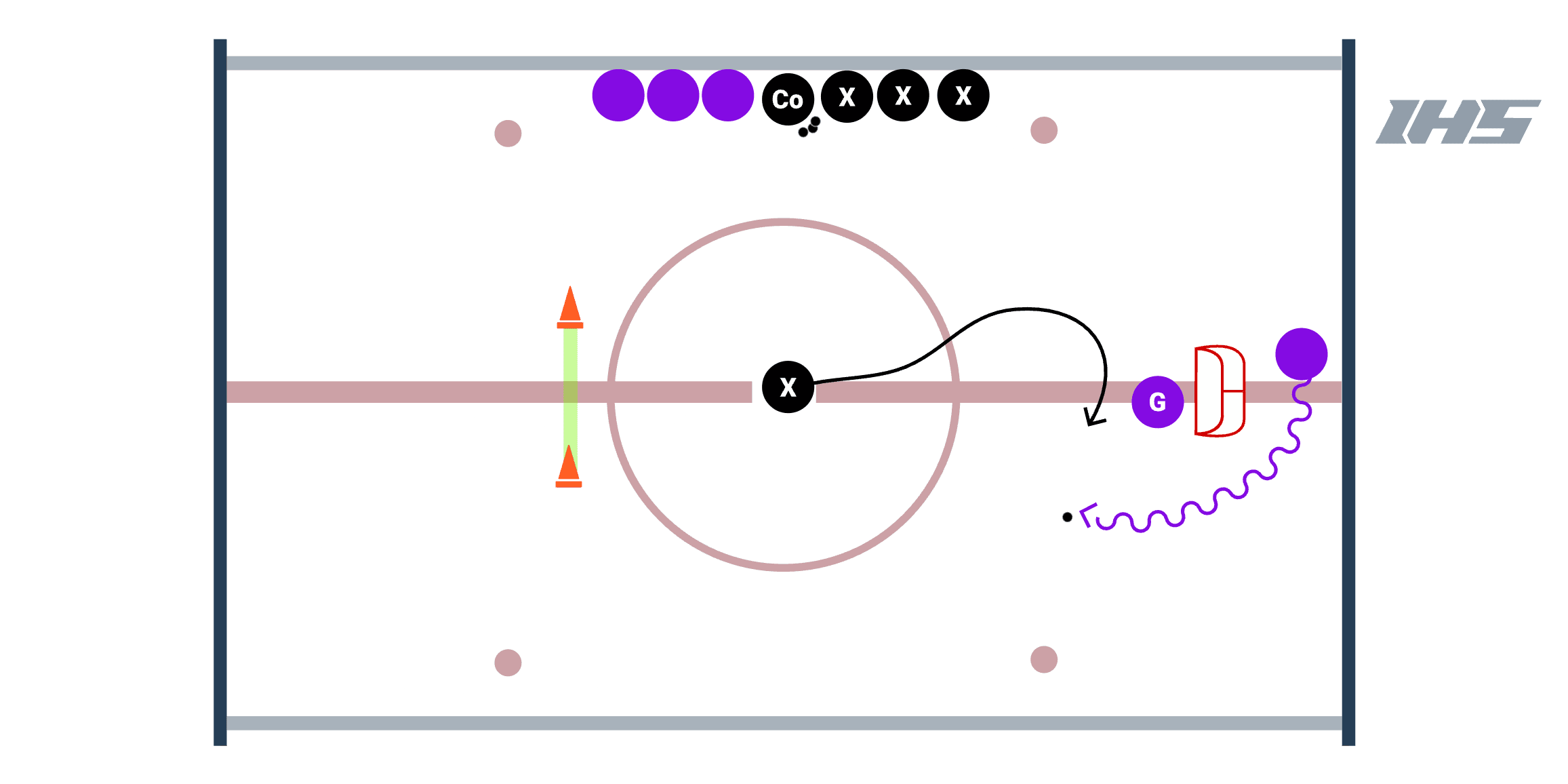
1 v 1 Use the Net from Jason Lammers is a great drill for all age levels that encourages offensive awareness and puck protection while the defenders work on angling and proper stick detail. The offensive team is trying to skate the puck through the gate while the defender is looking to strip the puck and score on net. Setup - Setup a net and a gate as the goals. These can be placed in center ice like the video displays, or in other areas of the ice. - A defensemen starts with the puck behind the net. - A forechecking forward starts in the middle of the playing area and tries to angle the defender to one area of the ice. - The defender keeps their head up, uses the net to protect the puck and tries to skate through the gates. - If the forward strips the puck, they try to score a goal on net. - After the rep the forward rotates to defense, the defender rotates out, and a player from the line sets up behind the net. - Keep score! 1 point for a goal through the gates and 2 points for a goal. Variations - Can set this up in different areas of the ice. - Can use tires, cones or gloves to create the gate. - Can make the gate larger (makes the game easier for the breakout team) or smaller (makes the game harder) - Can progress this to 2 v 2, so that the defensive team has to work together to break the puck out and the forechecking team can work together to stop the breakout. - Can progress this to the in zone net and these two options: 1 v 1 Puck Retrieval to 2 v 1 from Jason Lammers 2 v 1 Use the Net drill from Topher Scott - 1 v 1 Puck Retrieval to 2 v 1 from Jason Lammers - 2 v 1 Use the Net drill from Topher Scott
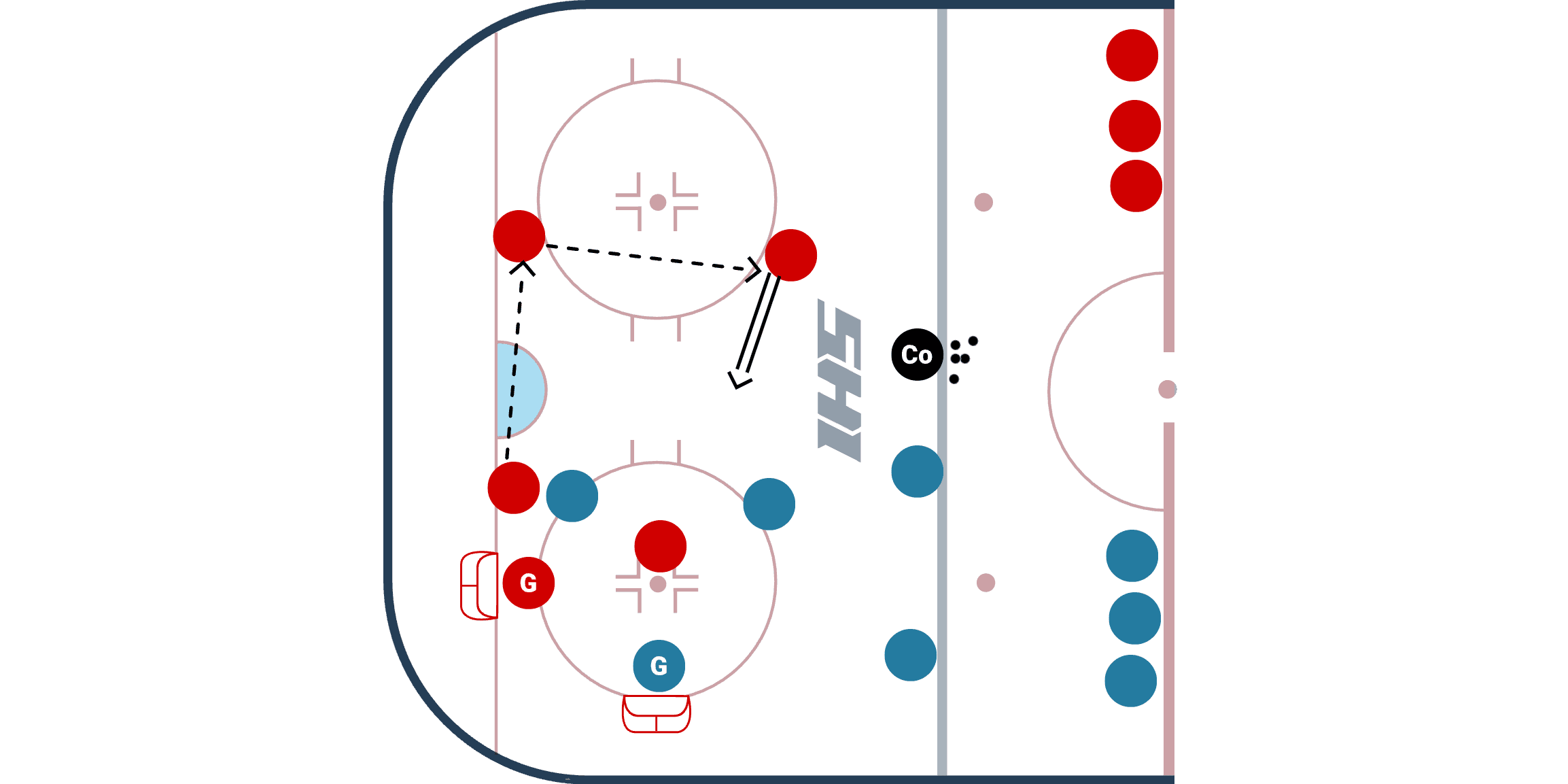
2 v 2 Net Front Corner Battles with Support is a competitive 2 v 2 small area game from the 2025 Buffalo Sabres Development Camp that practices corner and net front battles. The design of this drill encourages players to win the puck battle and pass it to the point for support and a shot, tip or redirect on net. Setup - Nets are in the corner as shown in the diagram. - Each team has 2 players at the point, 2 players in zone, and 1 goalie. - The drill begins with a coach flipping the puck into the zone. - Each team is working to retrieve the puck and score on the opposing teams net, while the defending team is working to get the puck back so they can score on the other net. - Coaches can require the defense to have to pass the puck to the point before they can transition to offense, or they can allow the defense to immediately attack the other teams goal. Variations - Coaches can require the defense to have to pass the puck to the point before they can transition to offense, or they can allow the defense to immediately attack the other teams goal. - Coaches can require the defense to only look for passes and redirects and no shots. - Coaches can require the defense to one touch or two touch everything so the puck is not sitting at the point. - Coaches can only allow the defense to go d to d once or twice (if they allow them to go back and fourth unlimited times it can slow the game down) - This drill is a variation of Defend Net Front Progression With 2 Point Players, which sets up the two goals on the goal line and gives the players more space but works on similar concepts and would be better for younger age levels.
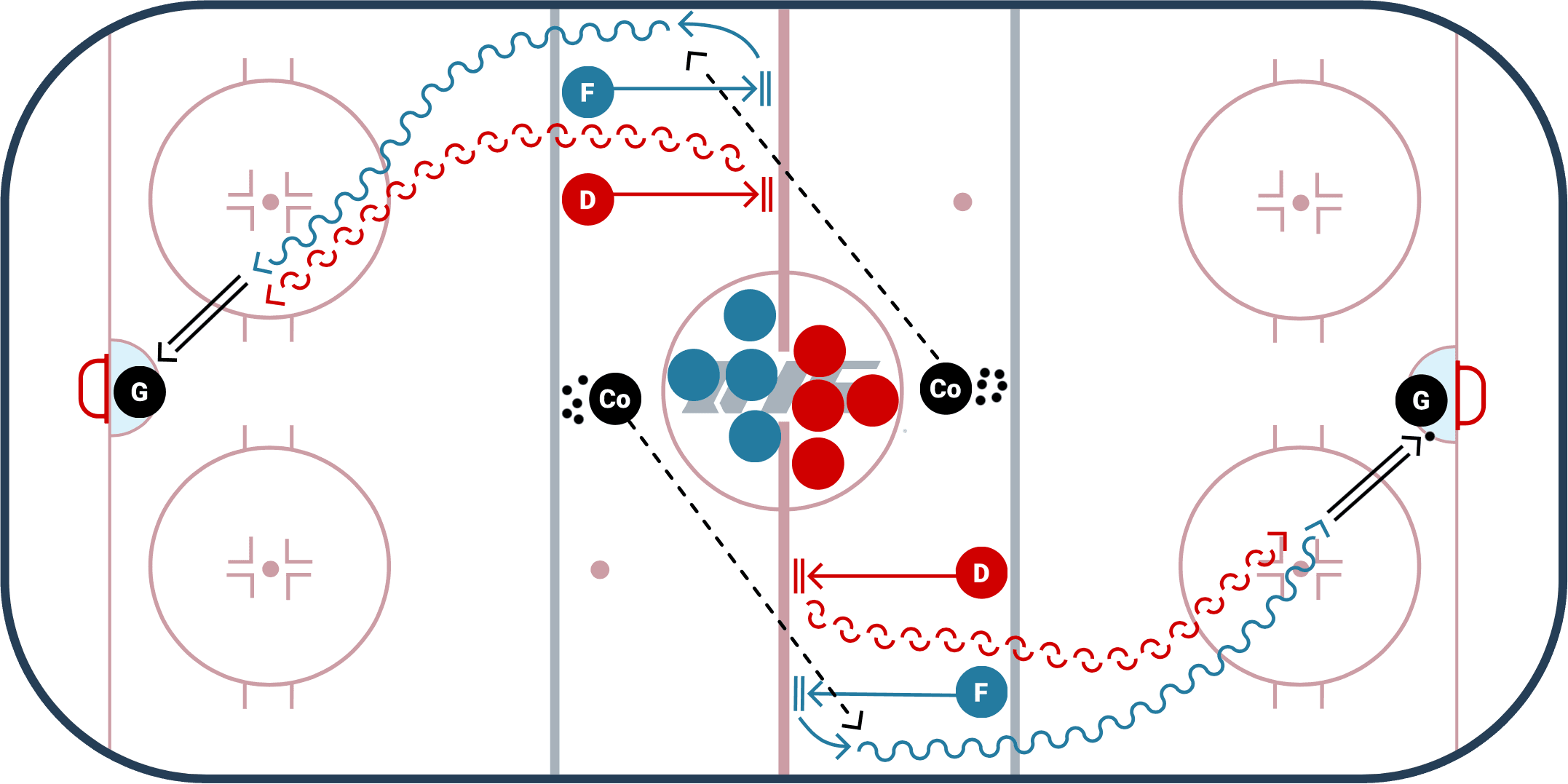
This one on one drill focuses on an area of the ice where a lot of turnovers occur. Being able to transition quickly will help generate scoring chances. This drill sets players up in a situation where the sole purpose is to have them keep moving their feet as they enter the zone, fighting through the check if they have to. Setup - This can be set up as a full ice (as shown in the video), or half ice on both sides, or as a station drill. - The drill is set up with the pucks and coaches in the middle of the ice at about the edge of the center face-off circle with pucks. The extra players are inside the center circle out of the way. The forward starts on the blue line along the wall and the defense start on the blue line just inside the dots. - On the whistle, both players skate up to the red line and stop. The forward calls to receive a pass from the coach (or another player) and the defense transitions backwards... then the danger zone starts! - Variation: If the defense is getting beat too often, you can have them stop or pivot backwards in between the blue line & center line, which will give them a bit of a head start on the forwards. Forward Options - Outside Option: The first is to use their speed and gain the zone to the outside. If the defense is able to play them at the blue line then they can give themselves a soft chip inside the zone and keep their feet moving through the check. - Middle of Ice Option: If the defense does not do a good job at the blue line and allows the forward to enter the zone with space then the forward can cut to the middle of the ice. It is important that the forwards get the puck down deep into the zone in this situation. - Get Creative! Anything goes! Change up your skating speed and tempo, use deceptive moves with your body and puck control to get the defenceman off balance, etc. Have fun and work to survive the danger zone! Defense Coaching Points - This 1 on 1 drill is for a very specific part of the ice. More 1 on 1 situational drills can be viewed on our 1 on 1 hockey drills page.
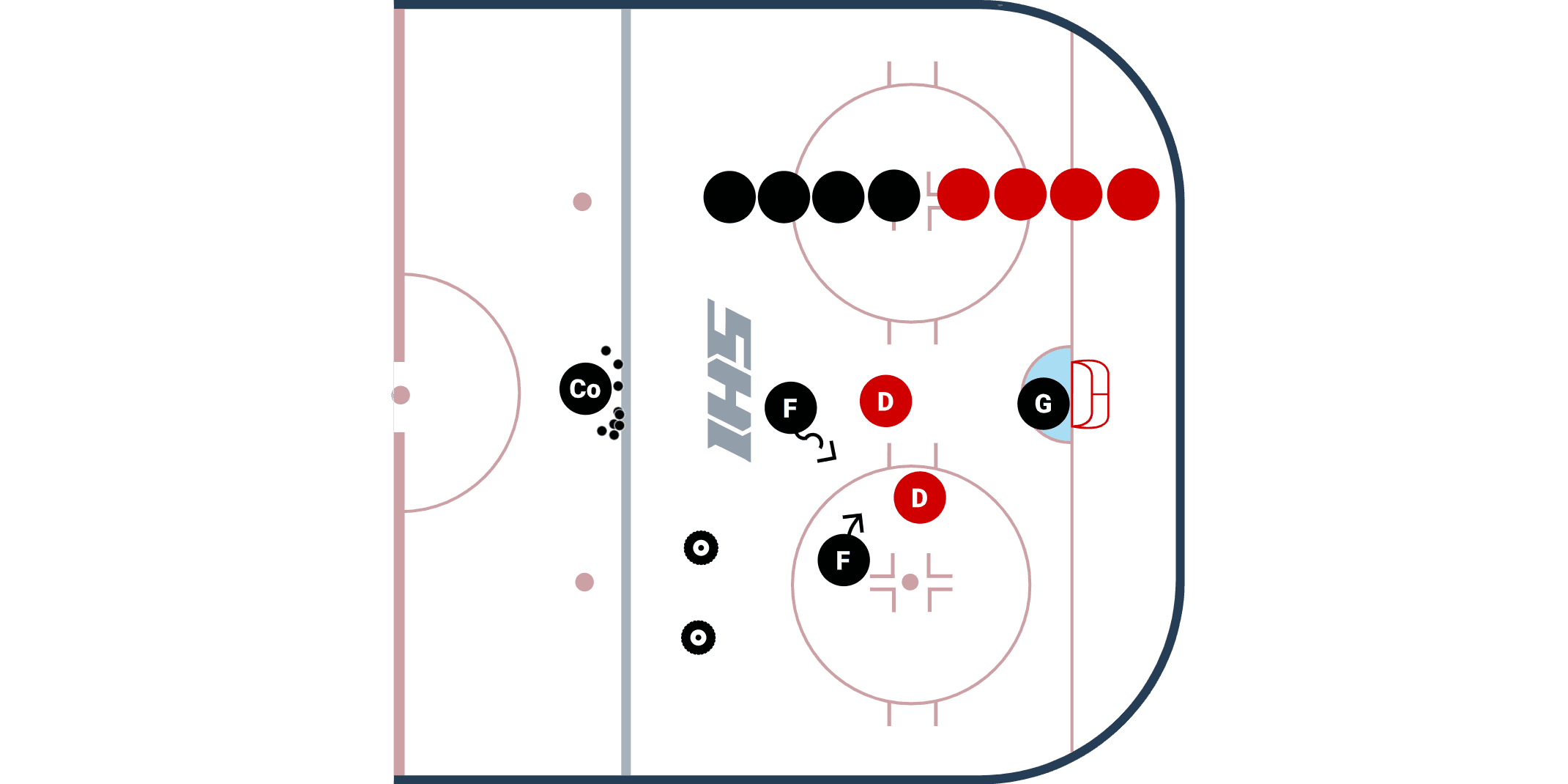
Picket Fences is a great small area hockey game that can be setup as a 2 vs. 2 or 3 vs. 3 game. The offensive team gets 2 points for scoring a goal and the defensive team gets 1 point by skating the puck between the tires. Game: Objective: Play a Game up to a certain Number (1 point for the Defensive Team skating the puck between the tires & 2 points for the Offensive Team when they score) - When the whistle blows, three players in White (Offensive) get a puck from coach while three players in Red (Defensive) being to defend - The team in White attempts to score while the Team in Red attempts to steal the puck & skate it between the tires - The coach allows the players to compete for 20-30 seconds - There is NO change of possession (White is offense the entire shift) - When the next whistle blows, three new players enter from the White and Red team - Now, Red is on Offense and White is on Defense - Coach can give a new puck to the Offensive Team if: - If the goalie covers the puck - If the puck goes out of play - A goal is scored - The defensive team skates the puck between the tires Principles: The brilliance of this game is both teams are attempting to ‘score’ while one attacks the goalie & one aims for possession to skate the puck between the tires. The game incorporates: - Defending 3v3 (in a condensed space) - Once the Defenders gain possession of the puck, they must thinking ‘offensively’ to skate/get open to score a Goal (skate puck between tires) - Communication with other teammates is essential so each defender can operate in a ‘man on man’ scenario - Attacking 3v3 (in a condensed space) - The offensive players are can either challenge a defender 1v1 with the puck or try to isolate and create a 2v1 on a defender - Player without the puck must work to get open, drive net or create space for teammates - Must find a way to create space & opportunities to get off a quality shot with pressure - ‘Play after the Play’ – anticipate loose puck/rebounds and regain possession for more offensive zone time with the puck - Players must constantly talk & perceive the ever changing environment to solve problems as they happen (both offensively & defensively) Related Game / Variation The picket fences 3 vs 3 uses the full zone and incorporates 2 gates. This way the defenders can use deception or are forced to use another option in order to carry the puck through the gates.
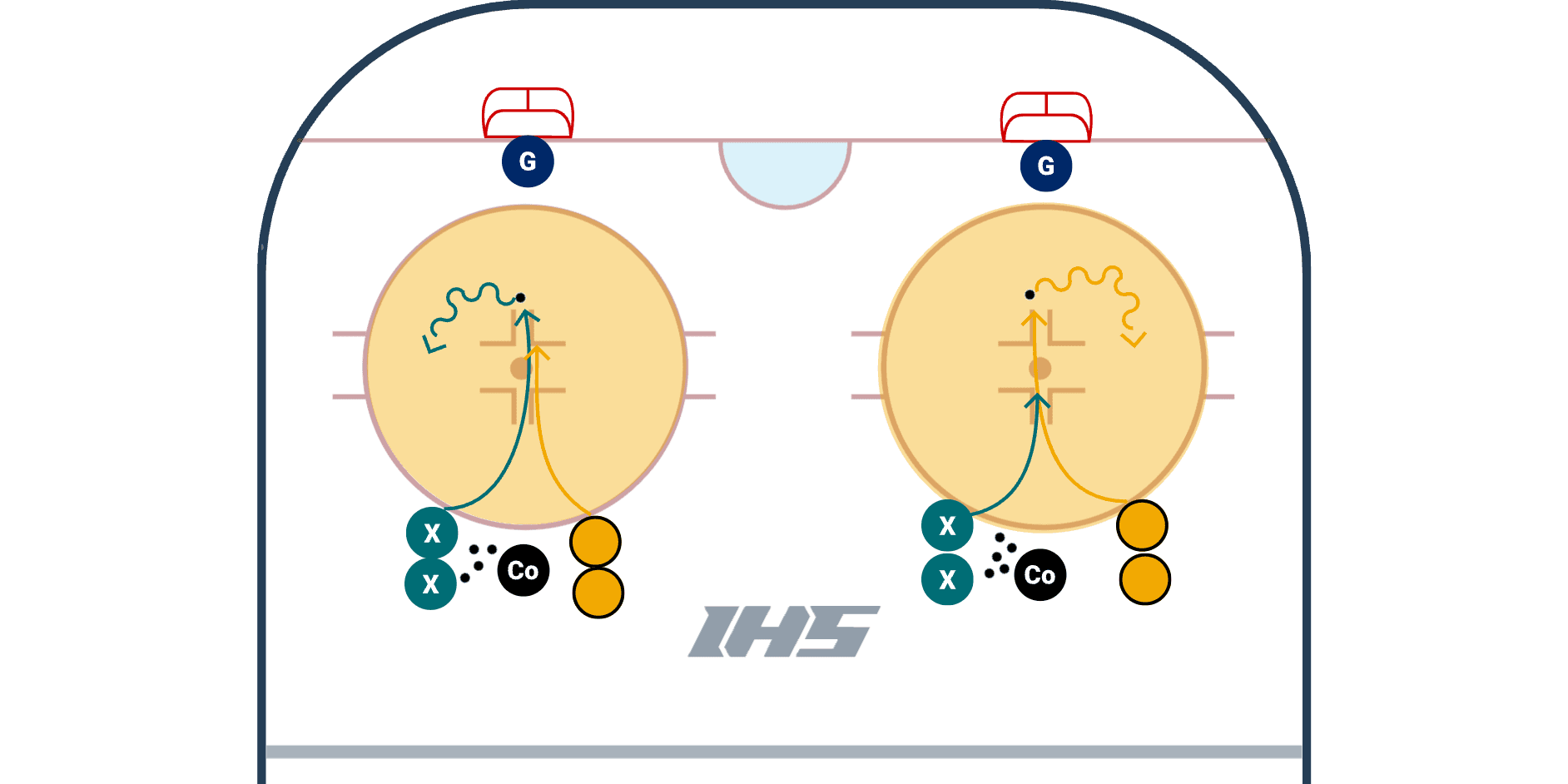
New York Sirens forward Elle Hartje teaches players that winning a puck race isn't about being first to the puck—it's about winning the puck line. This competitive puck battle game develops body positioning on puck races, puck protection under pressure, and the ability to quickly transition into offense or defense on the second whistle. Setup - Coach places a puck inside one of the faceoff circles. - Two players begin outside the circle. - On the first whistle ("Go!"), both players race to gain possession. - The player who wins the puck must protect it while staying inside the circle. - The defender applies pressure and attempts to steal possession. - If the puck leaves the circle, it is dead and the coach immediately spots a new puck in the circle. - On the second whistle ("Go!"), play becomes live. The player with possession attacks the net to score, while the defender tries to regain possession and return the puck to the coach. Coaching Points - This drill was filmed at the Girls Pro Edge Experience at Rochester Ice Center.
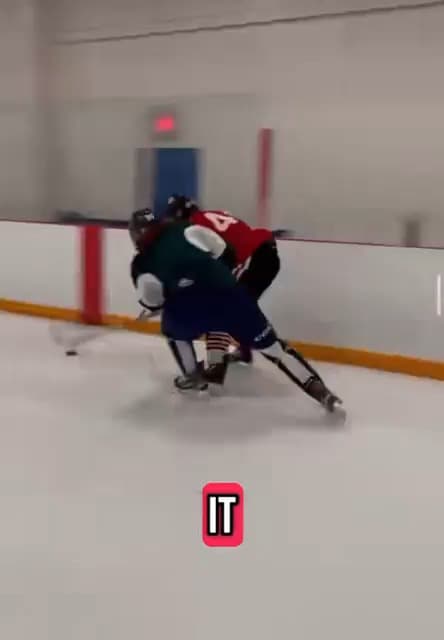
Shoot, strip the next puck, shoot again. Keep the feet moving the whole way through.
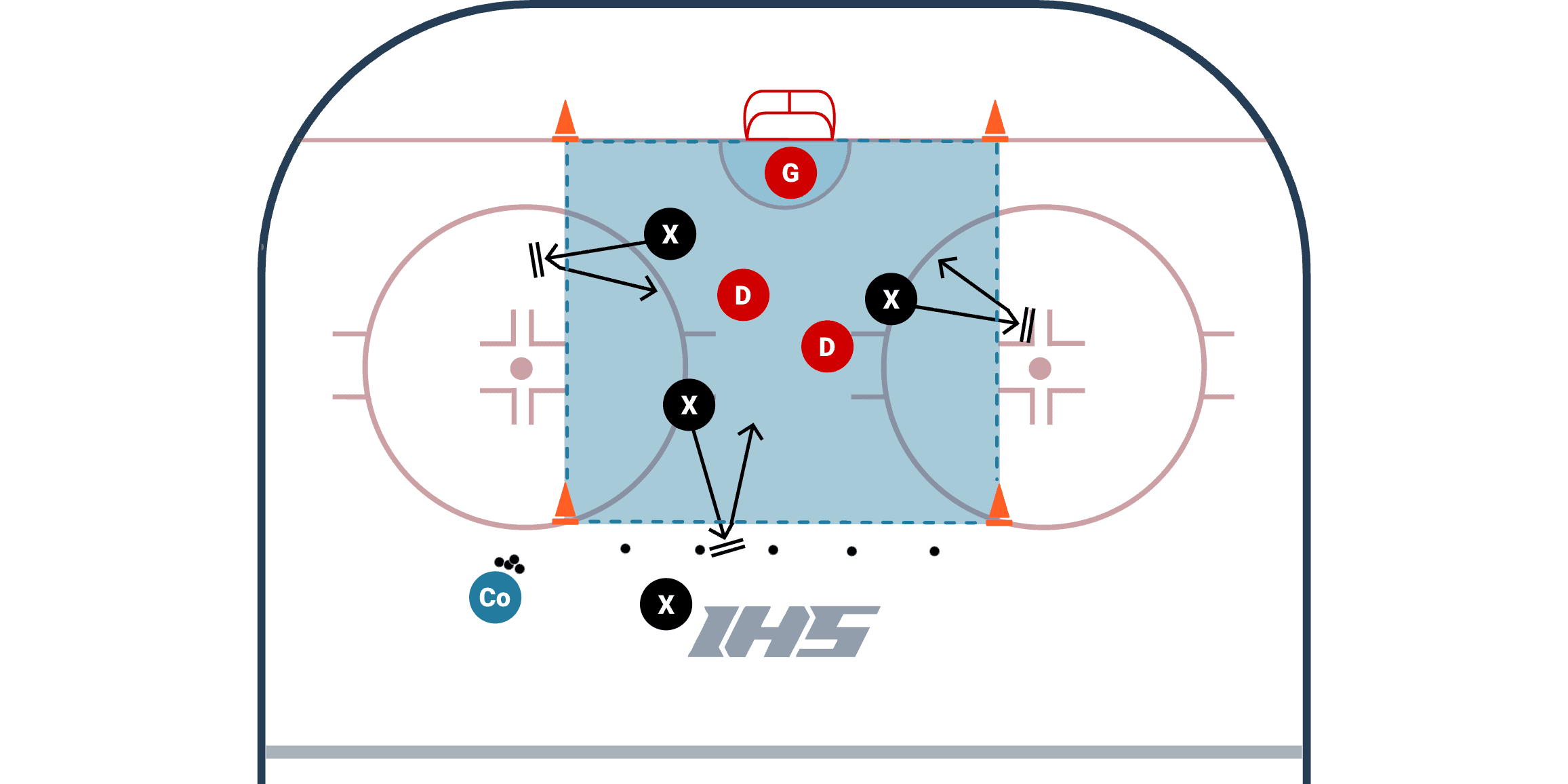
The Tomas Holmstrom Small Area Game from Spiros Anastas is a competitive net front battle drill designed to teach offensive players how to get inside for screens, tips, and rebounds while defenders work on box outs, containment, and blocking shots. A shooter fires from the top of the circles as players fight for positioning inside a defined box. Drill Setup - Draw a box from just inside the dots and hashmarks up to the top of the circles and back down to the goal line. Drill Setup - Players: Drill Setup - 3 offensive players inside the game - 2 defensive players with the option to add a third to increase difficulty or emphasize shot blocking - 1 shooter positioned outside the box at the top of the circles Drill Setup - Place 5 pucks outside the box for five consecutive reps. Drill Setup - On each whistle all offensive players must tag up outside any boundary of the box which can include the goal line, the sides, or the high line. Defenders do not tag up but must track where attackers enter. The shooter can only shoot after the whistle but may delay to wait for a screen or tip. Shots only with no direct passes. After five reps switch offense and defense and keep score. Coaching Points - Offense: Coaching Points - Defense: Coaching Points - Shooter: Coaching Points - Goalie: Variations - Can make it 3 v 2 or 3 v 3 - Can require the defenseman to shoot further away - Can allow the defenseman to pass for redirects or one timers Variations - View more drills and content from Spiros Anastas