Baltimore Stars u14A2026-27

Shooting from the boards is a low percentage play if you're trying to score on the first shot. It happens! I witnessed it against my team just the other night in fact. But what it's really good for is creating chaos in front of the net. That said, if we can shoot from the low slot, that's a higher percentage play, right? The problem is that we have to get the puck there first, and the other team also knows it's a higher percentage play. So let's combine the two. I wanted a simple small sided game that focuses on wall play under pressure. Let's get it off the wall and into the middle of the ice for a higher percentage chance. And if that's not available? Let's keep the defenders honest.
The 3 on 3 Transition Game from Cail MacLean is a high tempo 3 on 3 small area game that encourages quick offense. Variations - Can play 3 on 3 in zone (as shown), or 2 on 2 half ice, or 2 on 2 quarter ice, or 1 on 1 quarter ice. - Can have players line up in different areas of the ice (tops of circles, blue line, center ice, etc).

4v3+1 with the dot lanes marked with the industrial strength sharpie
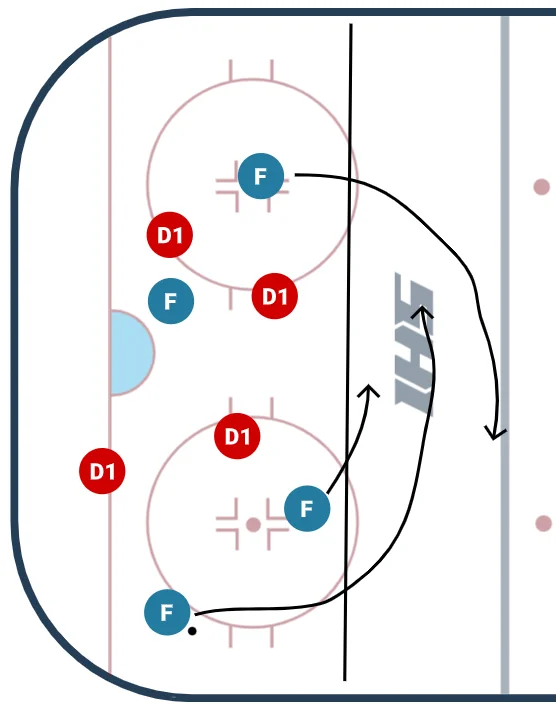
4v4 3 in High Ice SSG 1 net, 1 endzone game On change of possession, at least 3 of 4 players must get above the line before attacking downhill Highlights high ice possession and elements of creating confusion through high ice actions
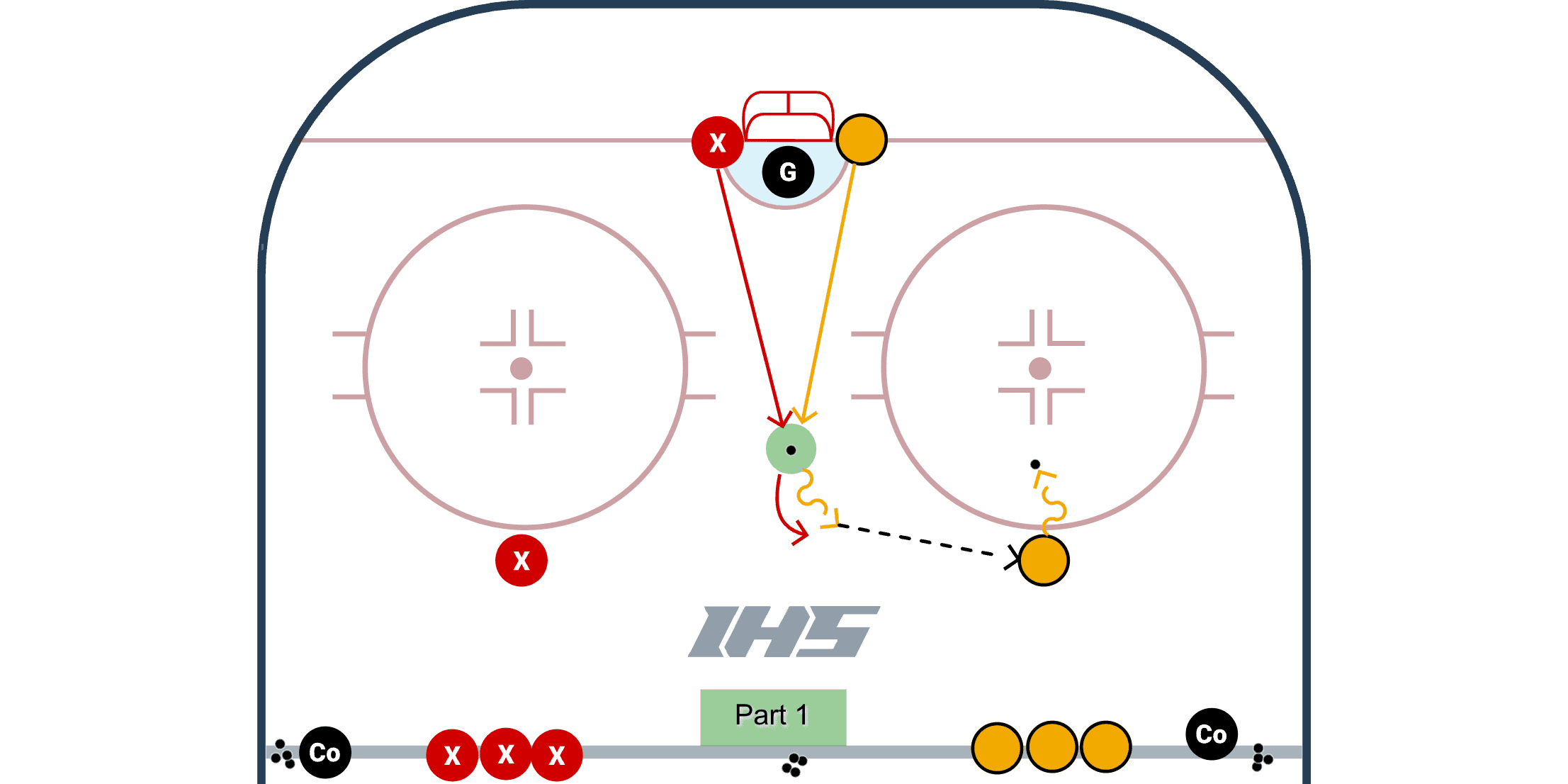
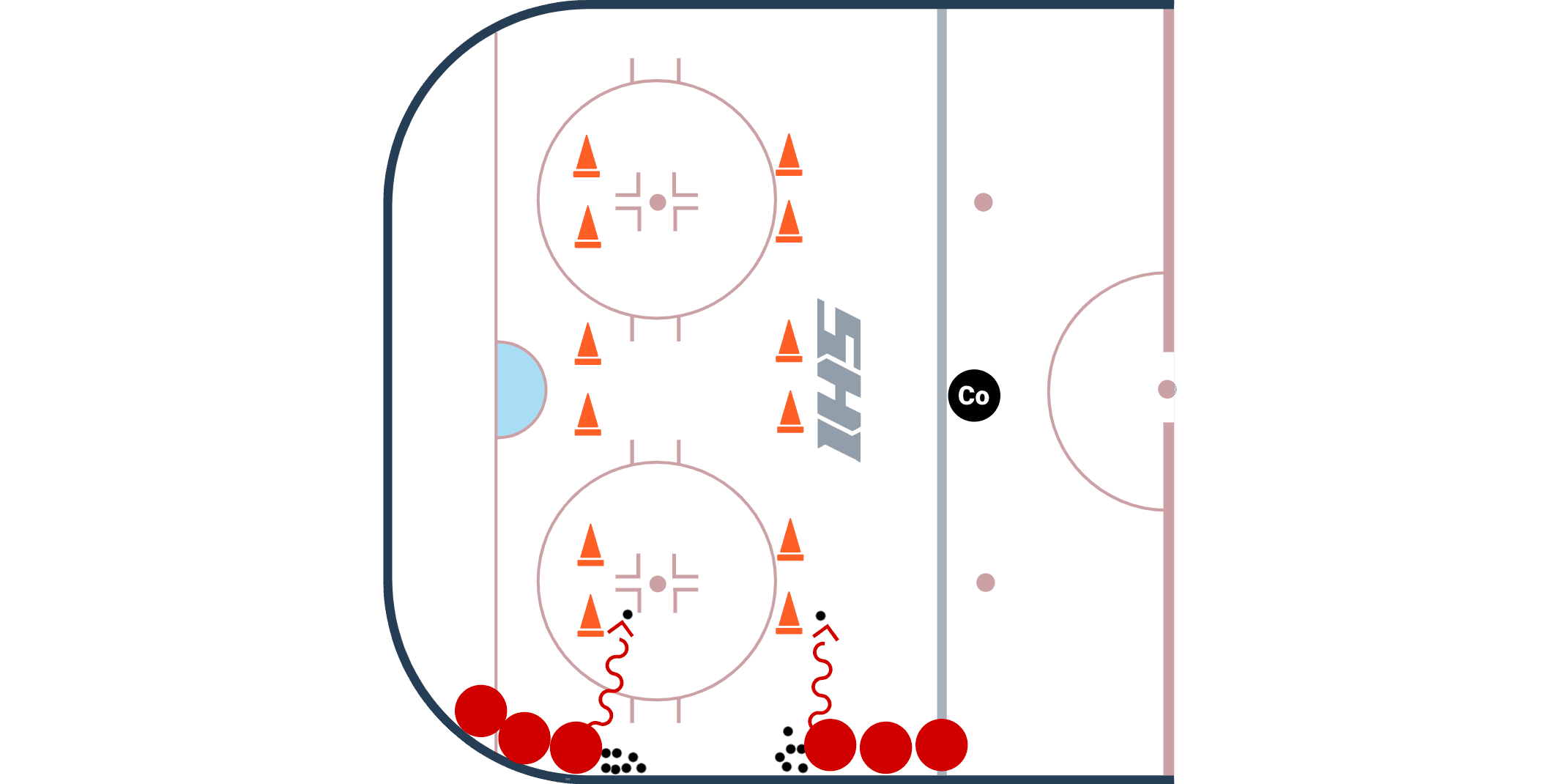
Objective The Brooksy Utah Mammoth from John Dean helps players develop competitive habits for winning loose pucks, cutting through an opponent’s hands, and making the next play immediately. The drill progresses from a puck race into a quick 2 vs. 1, followed by a rim retrieval under pressure and a 2 vs. 2. Variations - You can have the last players in line on both sides of the ice be the person who rims the puck instead of the coach. - Coaches can place the puck race in different areas of the ice. - Coaches can place the support players in different areas of the ice.
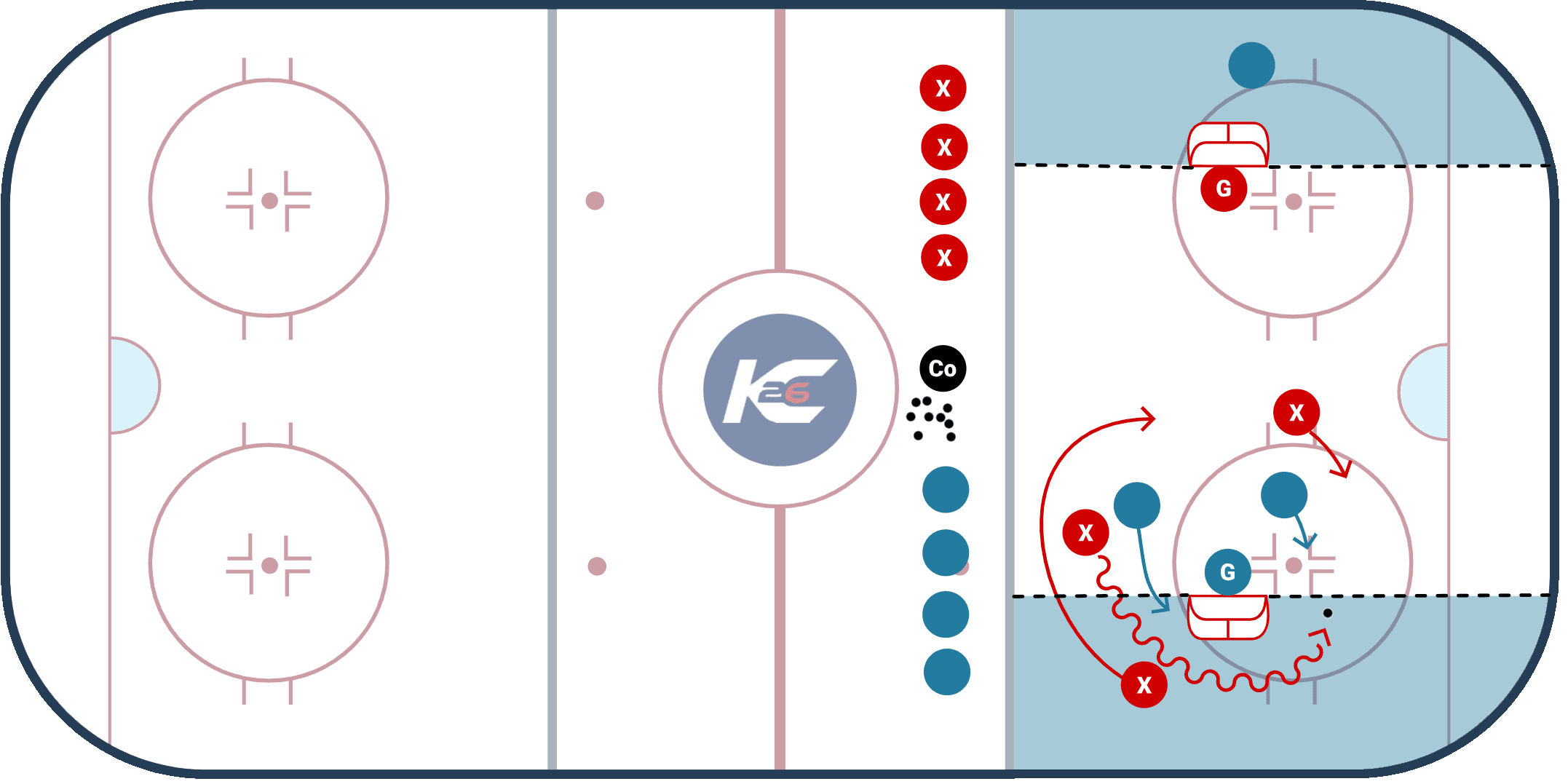
The Gretzky 2 vs. 2 Switch game from Kendall Coyne Schofield is a great small area game that has a modification to the normal Gretzky 2 v 2 Game: the "Gretzky" behind the net can switch with active players at any point, so long as at least one player is behind the goal line. This modification allows more options for player to create offense and encourages exchanges and switches. - In a half ice setup, place two nets facing each other in opposite face off circles. - Have a 2 vs. 2 in the middle of the ice. - Each team has 1 player behind the net in their offensive zone. They can not go in front of the net unless one of their 2 teammates activates a switch - To start, coach can pass a puck, take a shot on net, or chip it in the middle of the ice for a battle. - Keep score! - Offensive players: - Players in the middle of the ice: work on give and go's and exchanges with your teammates and your "Gretzky" - Players behind the net: know where you want to pass to before you get the puck. Use the net as protection and get creative. Communicate with your teammates on opportunities you can create through switches - Defensive players: - Head on a swivel and know where all of the players are. - Keep stick on ice to block passing lanes. Variations - Can be 2v2 or 3v3 in the middle of the ice - Can allow 2 "Gretzky's" - Can require players to only hold the puck for 1 or 2 seconds or a whistle is blown
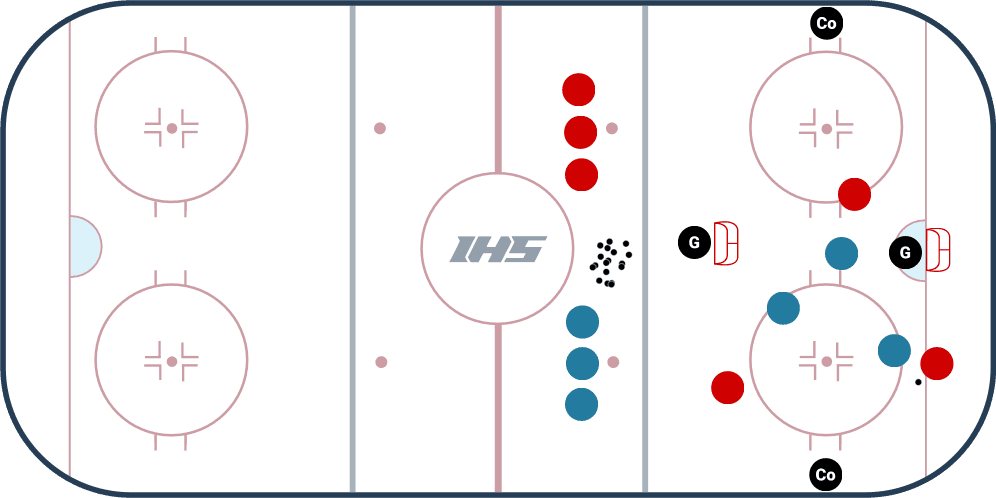
A fun small area game to keep players, goalies and coaches on their toes! The video clip is of The Buffalo Sabres's playing Levels during their development camp. As time went on and the players got more comfortable with the game, you could tell they absolutely loved it. To do well in this game it is important that teams transition quickly, communicate well, create space on offense and takeaway space on defense. Game Setup - 2 nets and 2 goalies. 1 net is flipped the other way. - 3 vs 3 with coaches that act as "bumpers." You can swap the coaches with players to get more players involved. - For the start of the game, the coach dumps the puck in for 50/50 puck. - Whichever team gets to the puck and passes to a coach is on offense and is allowed to shoot on both nets. The coach or "bumper" must always pass back to the team that passed them the puck. - During the game, if the defense gets the puck, they need to transition by passing to a coach first before they can play offense and attack. - The game presented lots of unique situations and everyone needed to be paying attention. Please note: Having a net facing the opposite way presents fun, unique opportunities in the game, but it also has the opportunity for players to get hit with shots if someone misses the net. That is one reason why this activity is better for older age groups. If this is a concern for you as a coach, you can keep the exact same rules but flip the nets so they are both facing the "normal" way. Variations - You can also swap out the two coaches that are bumpers and use players. - This can be 2 vs 2 in a smaller area of ice. - You can flip nets so they are both facing backward or facing the normal way but keep the same rules. - You can add additional bumpers. Or you can allow all players that are waiting their turn in line to be bumpers so everyone is paying attention and involved! Related Content - 14 Benefits of Small Area Hockey Games & 45+ Game Ideas
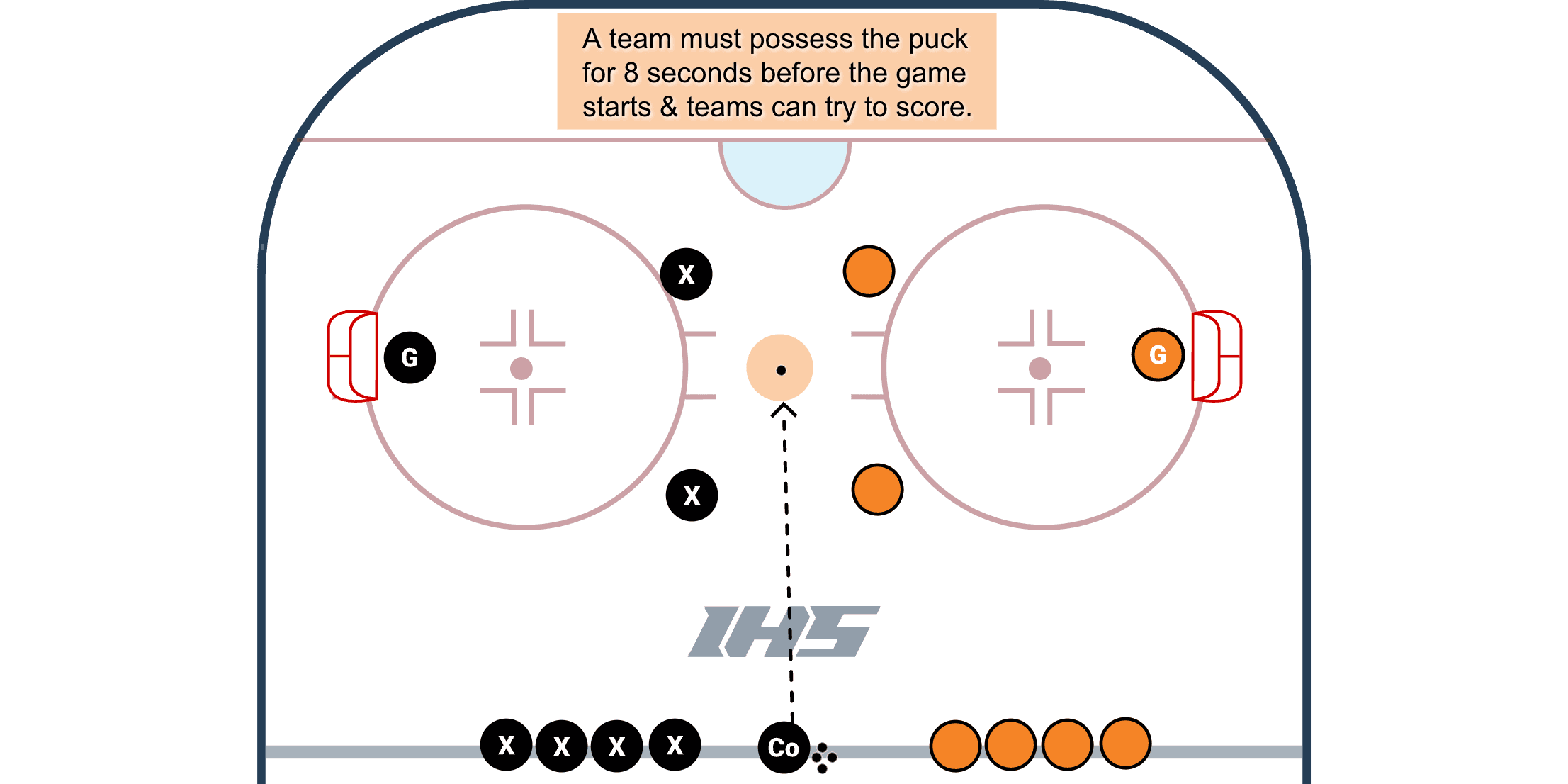
Objective Ride The Bull is a small area game from Matt Thomas that works on developing puck protection and possession skills under pressure. Teams must protect the puck, use their teammates, and keep possession for 8 seconds. If they are able to accomplish this, they are awarded a 3rd teammate and each teams begin game play to try to score on the opposing teams net. Variations - Can play 1v1, 2v2, or 3v3 - and the winning team is awarded an extra player. - Can change up the amount of time required to hold the puck on to.
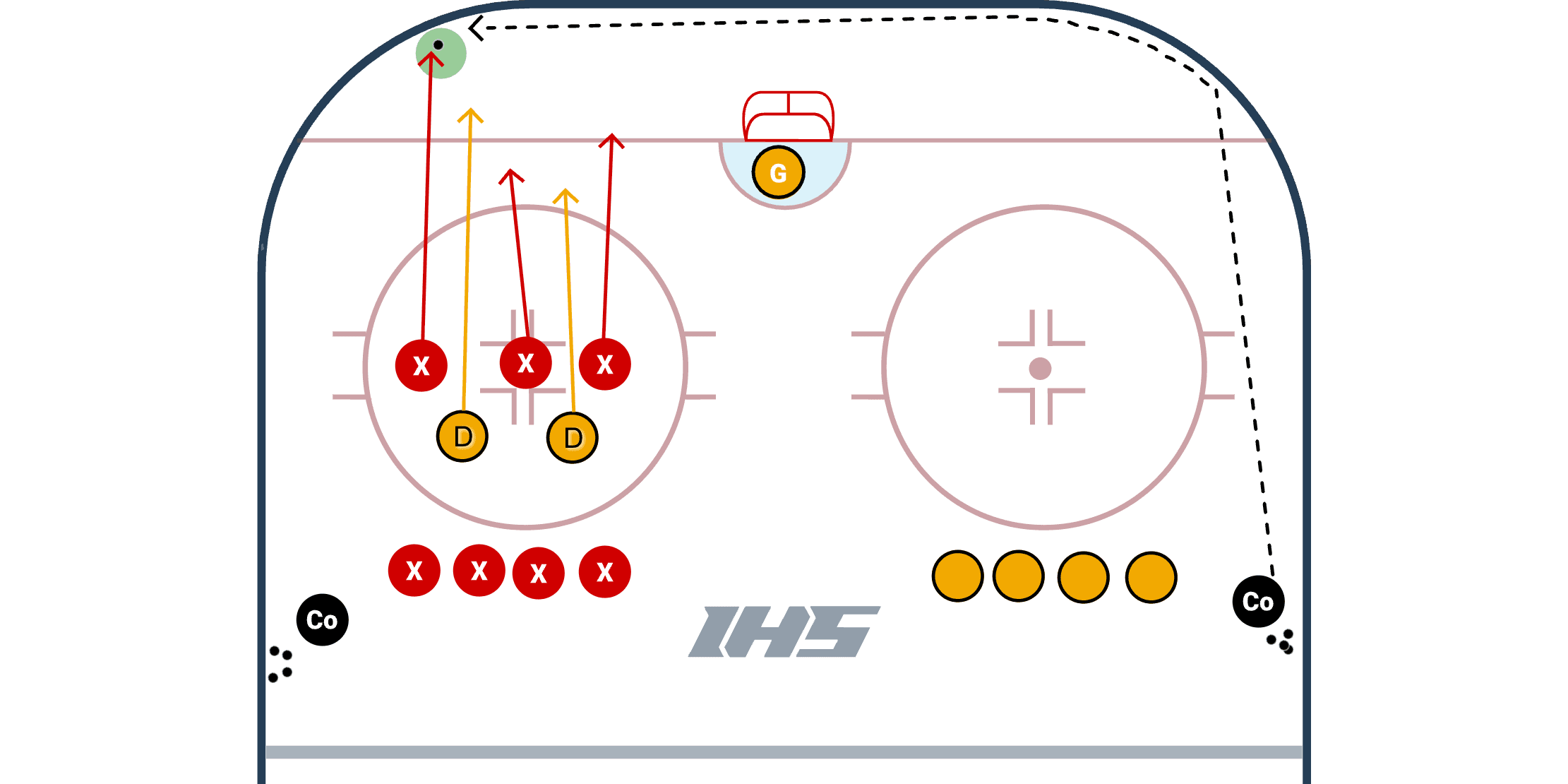
Objective The Yellow Runner Rally from John Dean teaches players to retrieve a contested rim, establish immediate support, and transition from a contested puck battle into offensive-zone possession. Once possession is earned, the three attackers form a possession triangle and use their numerical advantage to keep the offensive zone alive.
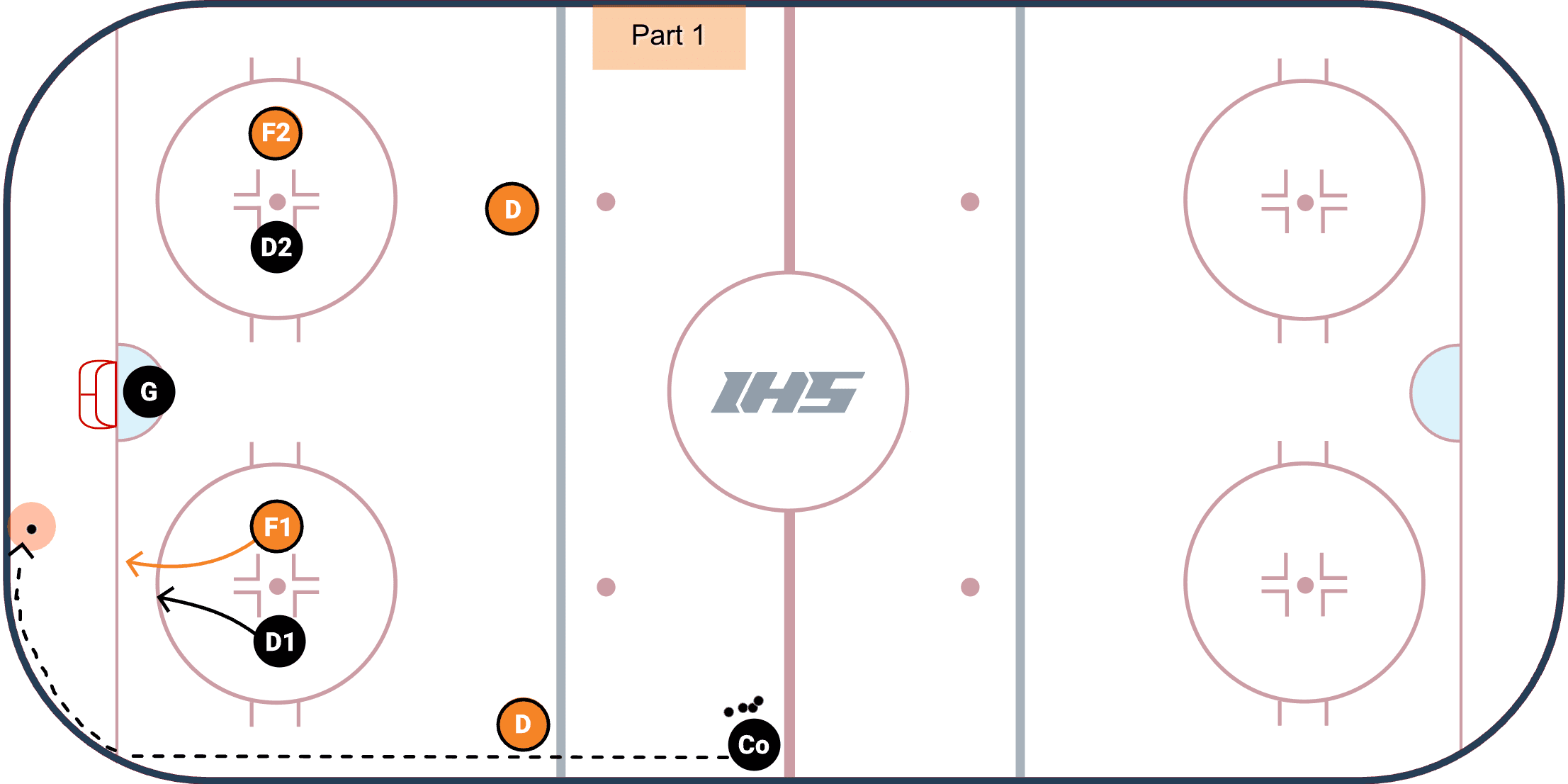
Objective Battle Creek 2 on 2 from Matt Thomas helps players develop puck protection and strong-side escapes from below the goal line, along with transitions and regroups to rush attacks. The drill also teaches defensemen to regain their gap through the middle, and defend while staying connected. Variations - Can make this 3/4 ice or 1/2 ice.
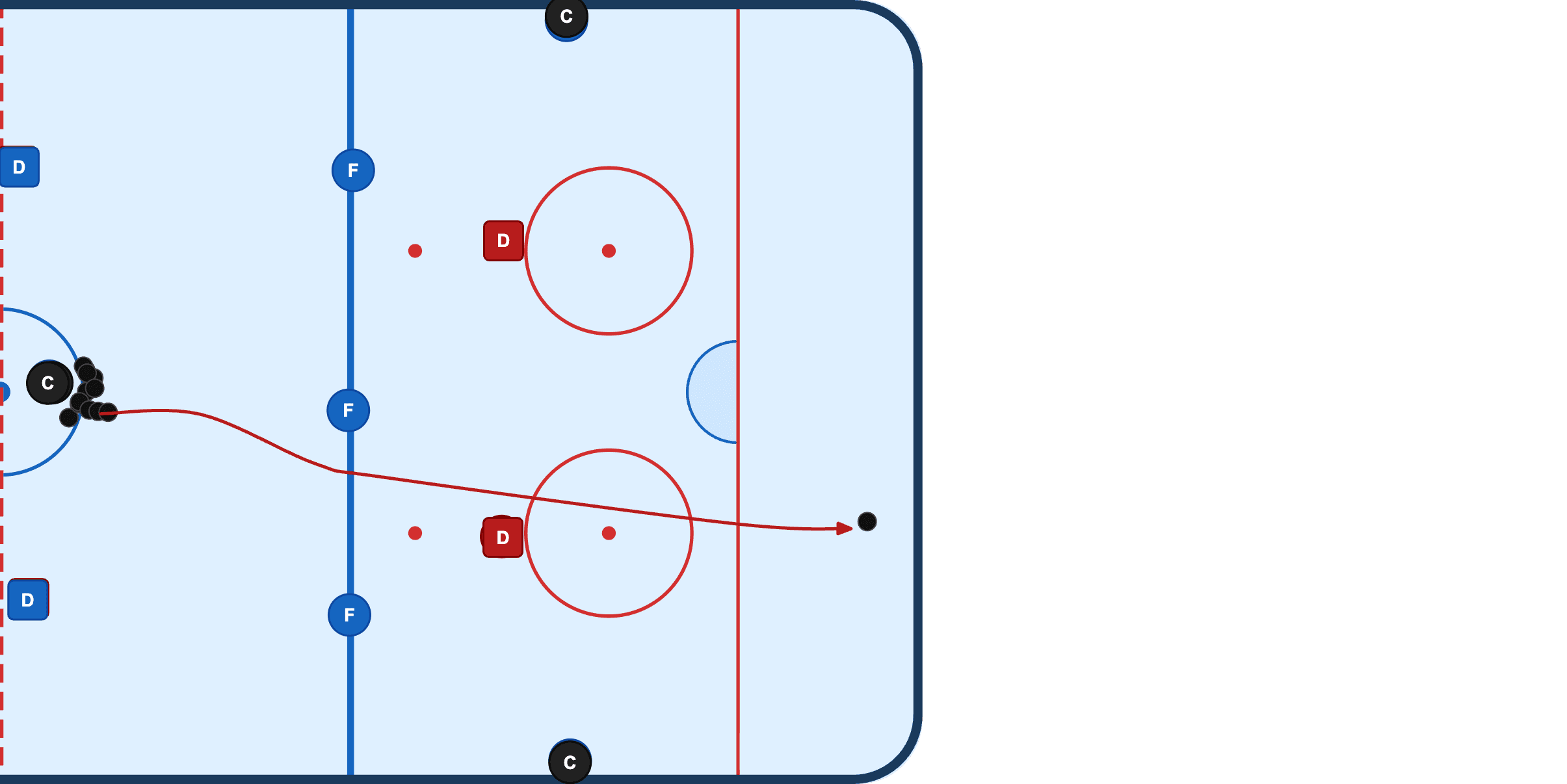
Practicing the Forecheck.
Objective The Yellow Runner Rally from John Dean teaches players to retrieve a contested rim, establish immediate support, and transition from a contested puck battle into offensive-zone possession. Once possession is earned, the three attackers form a possession triangle and use their numerical advantage to keep the offensive zone alive.
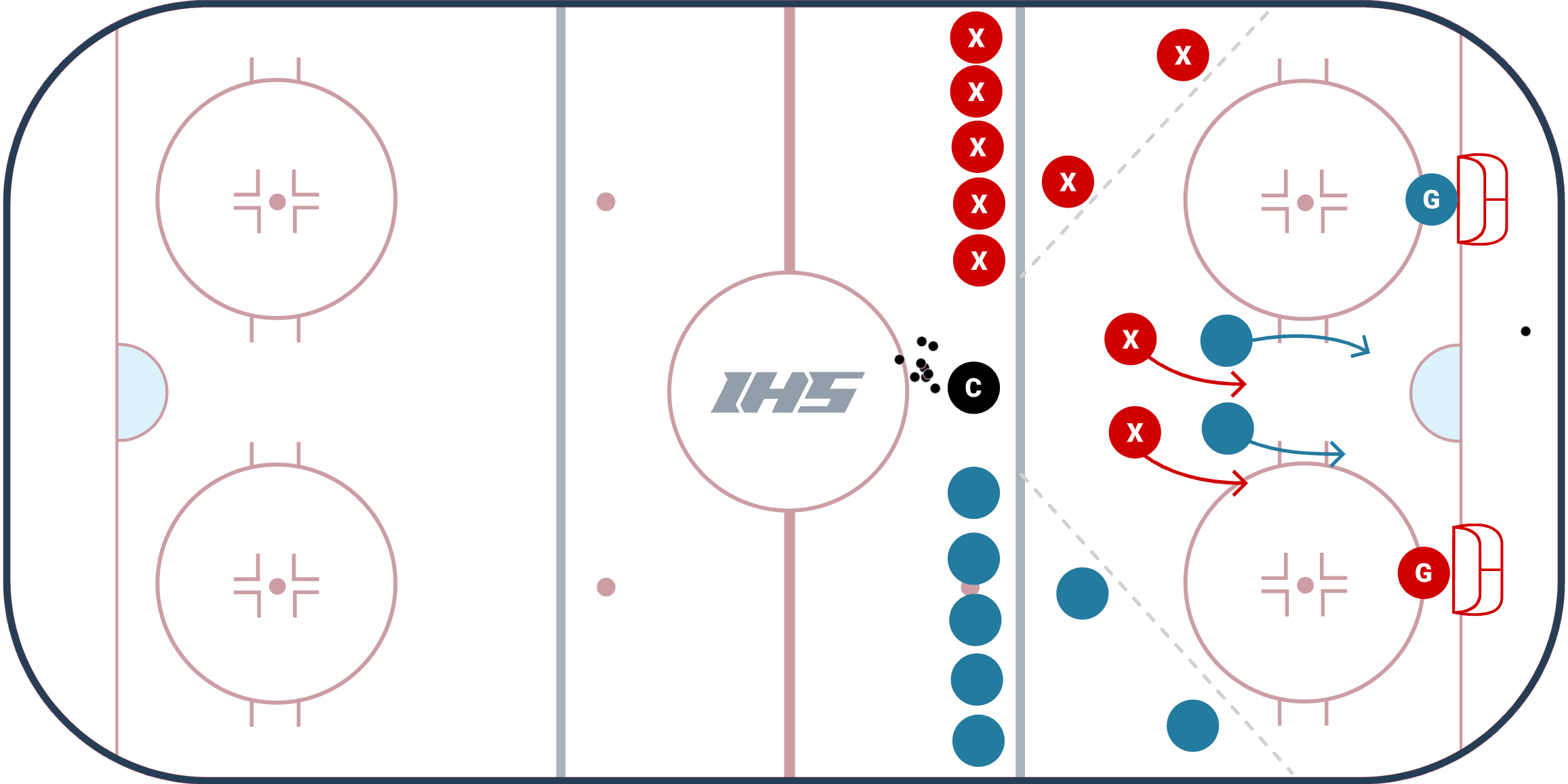
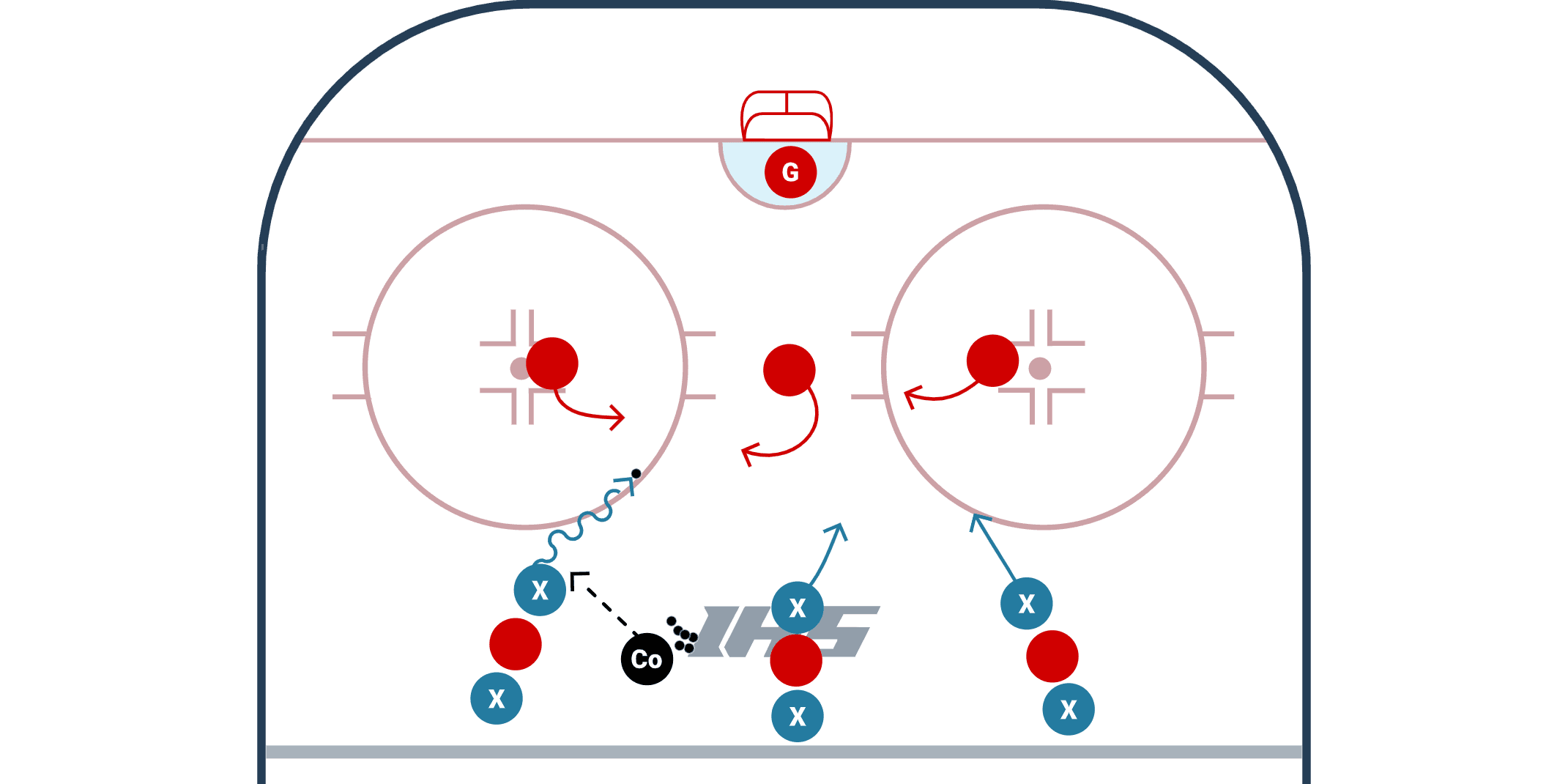
Description This small area game from Kendall Coyne Schofield requires a lot of decisions, thinking and working no matter which side of the puck you are on. It is great for working hard to get to open space and utilizing your support players to create opportunities on offense. The game reinforces all of the key themes that Kendall looks to get out of small area games including; moving, thinking, working, creativity, decision making and fun. Setup - 2 Nets should be set up on the goal line in an offensive zone in line with the face-off circles - Each team is designated a net for them to score on and another to defend - Teams consist of 2 active players and 2 stationary players - Players not participating can line up on the blue line and keep the puck in - The 2 active players per team can go anywhere in the zone - The 2 stationary players per team are lined up at the point and along the boards just above the hash mark - Coaches set up just outside of the blue line with pucks Game Objective: Play a game up to a certain number team "X" vs team "O" - Coach dumps 1 puck in and the players play 2 v 2 in the zone to try to score on the opponents net - The active players can use their stationary support players who can either pass or shoot to score - The coach allows players to compete as long as he or she sees fit (usually 30-40 seconds) - Each goal counts towards the team total - When the whistle blows or a goal is scored, the active players leave the zone to rest, the stationary players become the active players and 2 new stationary players come in - Coach can throw in a new puck when: - The goalie covers the puck - The puck goes out of play - A goal is scored Coaching Points - Working hard to get open and find lanes - Identifying and using outlets for support to relieve pressure - Communication: practicing both verbal and non-verbal communication with your teammates
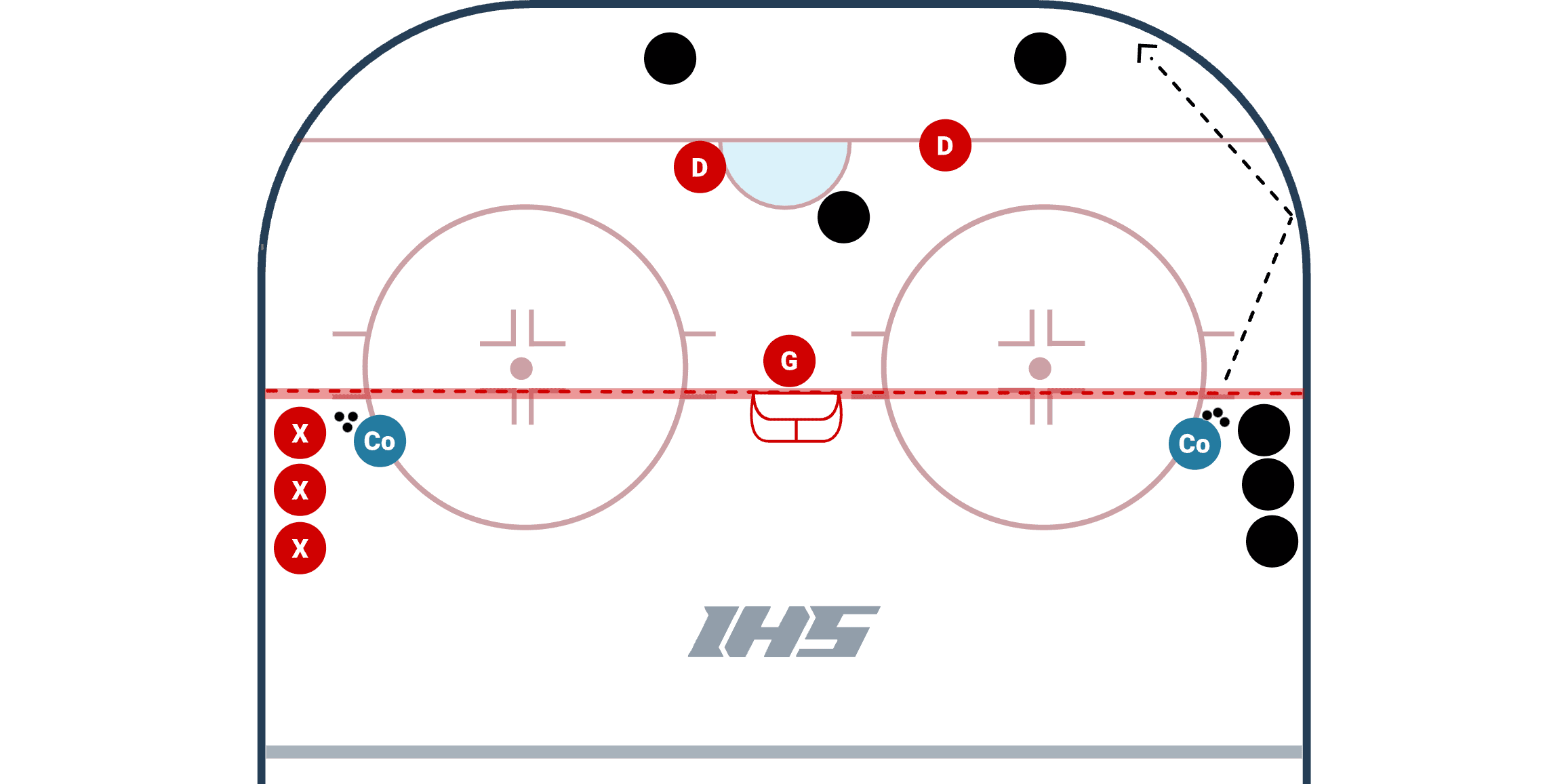
The Fran Gow 3 on 2 and 3 on 3 small area game focuses on controlling pucks off the wall, creating time and space, and attacking the net with purpose. Players learn to manage pressure, roll off defenders, protect the puck, and make quick decisions in tight areas while defenders work on stick on puck and box outs. Drill Setup - Place a net just above the hashmarks or along the ringette line if available. Establish a goal line across the ice with the net facing the end boards. - Start with three offensive players and two defensive players. You can add a third defender to make it three on three for additional compete. - Each offensive group receives three pucks. The first and third pucks are rimmed in by the coach on their side. The second puck is rimmed by the coach on the opposite side. - On each whistle a coach rims a puck around the boards. Offense must retrieve it, control it off the wall, and attack the net. Any time a puck crosses the line, enters the net, or is covered by the goalie, the next whistle starts the next puck. Coaching Points - Offense: Coaching Points - Defense: Coaching Points - General Concepts: Variations - Can place net on goal line, on the hashmarks (as shown in diagram) or on top of circles - Can play 3 v 2 or 3 v 3
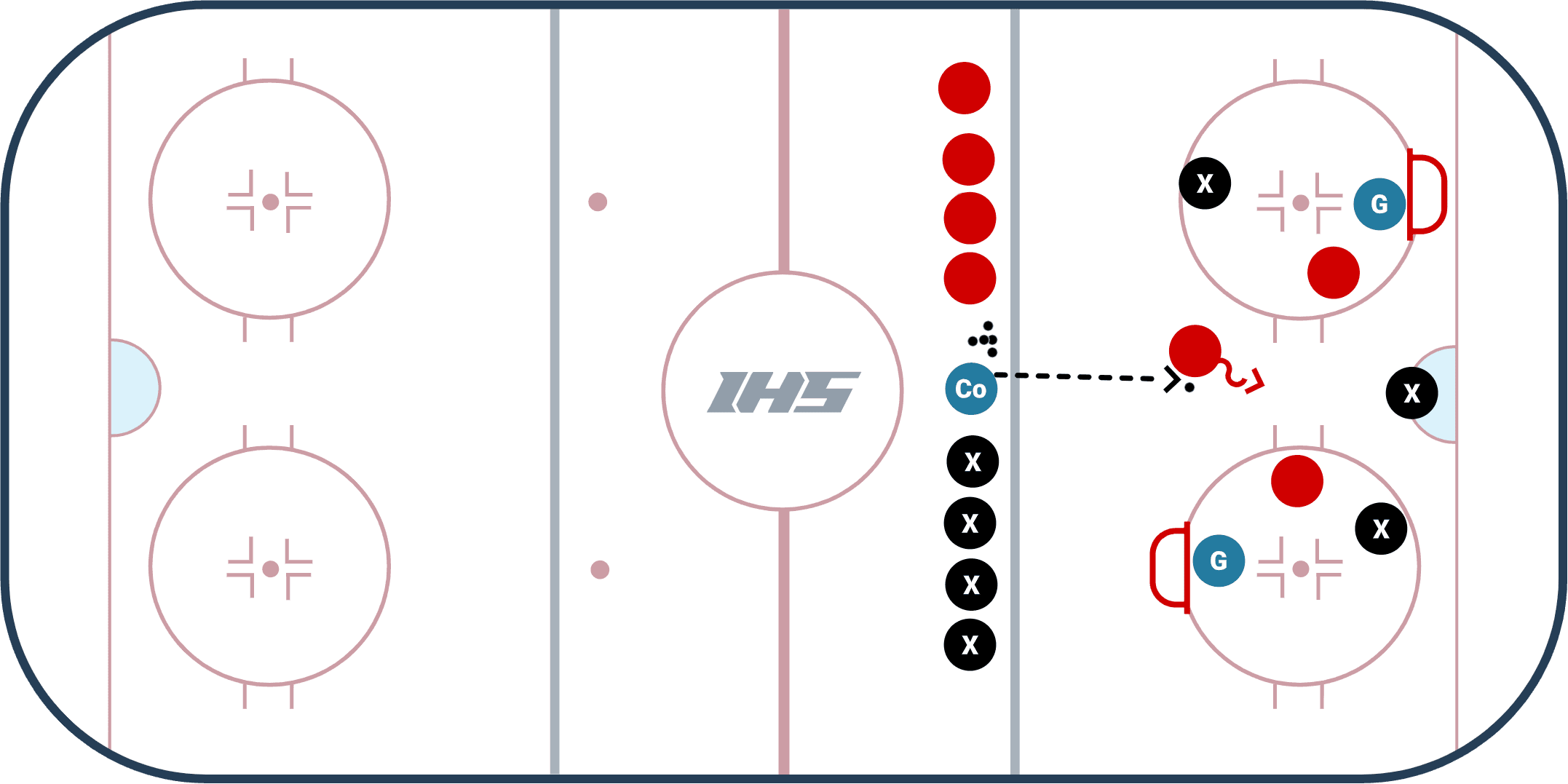
The Union Scoring Small Area Game from Topher Scott is a fun small area game where teams can score on either net. The unique setup of the nets promotes creativity, thinking outside of the box to create time & space and score goals. Setup - Coach chips the puck into the zone or passes to one of the players to begin the 3 vs. 3 game. - Players can score on either net. - Game can be stopped when a goal is scored, the goalie freezes the puck, or the coach blows the whistle. Keep score!
The Fran Gow 3 on 2 and 3 on 3 small area game focuses on controlling pucks off the wall, creating time and space, and attacking the net with purpose. Players learn to manage pressure, roll off defenders, protect the puck, and make quick decisions in tight areas while defenders work on stick on puck and box outs. Drill Setup - Place a net just above the hashmarks or along the ringette line if available. Establish a goal line across the ice with the net facing the end boards. - Start with three offensive players and two defensive players. You can add a third defender to make it three on three for additional compete. - Each offensive group receives three pucks. The first and third pucks are rimmed in by the coach on their side. The second puck is rimmed by the coach on the opposite side. - On each whistle a coach rims a puck around the boards. Offense must retrieve it, control it off the wall, and attack the net. Any time a puck crosses the line, enters the net, or is covered by the goalie, the next whistle starts the next puck. Coaching Points - Offense: Coaching Points - Defense: Coaching Points - General Concepts: Variations - Can place net on goal line, on the hashmarks (as shown in diagram) or on top of circles - Can play 3 v 2 or 3 v 3
Objective The Yellow Runner Rally from John Dean teaches players to retrieve a contested rim, establish immediate support, and transition from a contested puck battle into offensive-zone possession. Once possession is earned, the three attackers form a possession triangle and use their numerical advantage to keep the offensive zone alive.
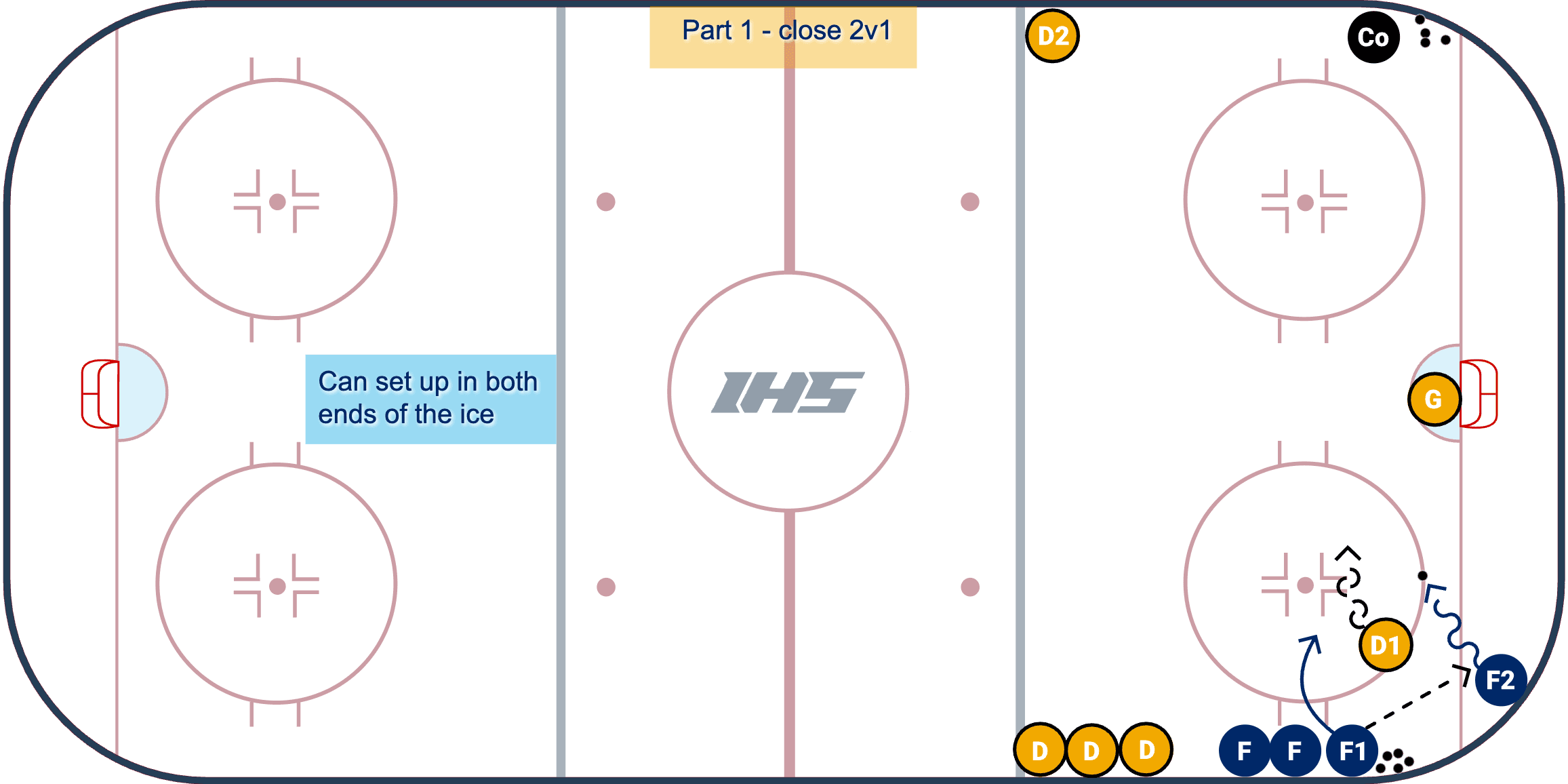
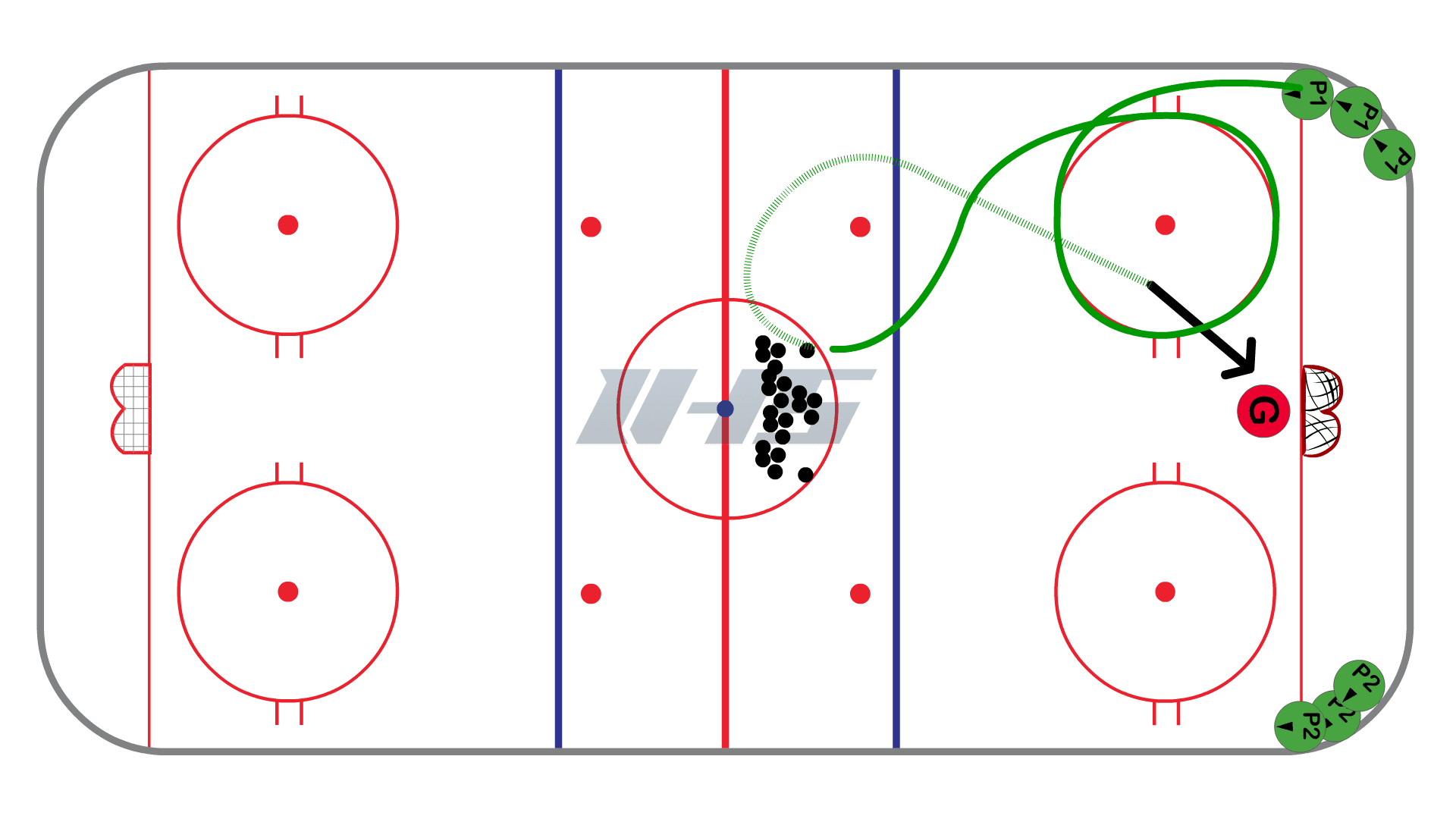
The 2 v 1 Preds drill from Jim Midgley focuses on quick offensive plays around the net, tracking habits, and transition offense. The drill begins with a tight 2-on-1 play down low where forwards try to create a quick scoring chance. Immediately after the play, one forward tracks back to pressure the coach and regain possession, leading into a regroup and a long 2-on-1 rush back up the ice. How It Works - On the whistle, the two forwards attack the defenseman in a tight 2 v 1 down low. - The forwards can use a quick exchange, scissor play, or short pass to create a scoring chance. - The goal is to make a quick play to the net and get a shot. - After the play, one forward immediately tracks back to pressure the coach and attempt to steal the puck. - The other forward works to get back inside the ice and support the play. - If the forwards regain the puck, they pass to the defenseman who quickly regroups the puck back to the forwards. - The forwards then attack up the ice in a long 2 v 1 rush against the original defenseman. Key Concepts - Quick offensive plays around the net - Tracking and puck pressure - Transition play - Regroup habits - 2-on-1 rush decision making
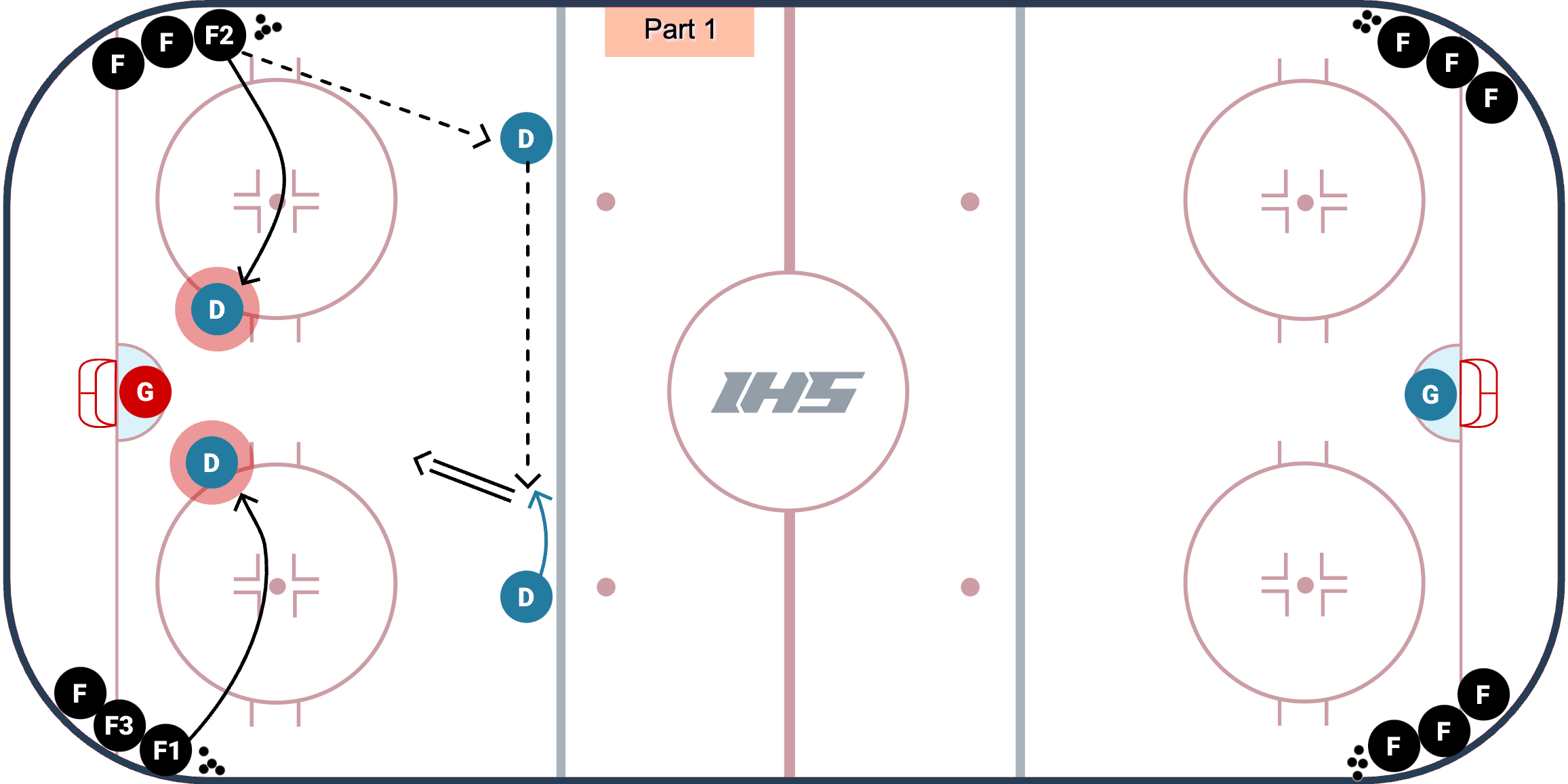
2 on 2 Box Out from Marty Wilford is a two-part drill designed to help defenders and forwards develop their net-front battle skills. The drill concludes with a 2-on-2 rush to reinforce defensive positioning and offensive attack strategies.
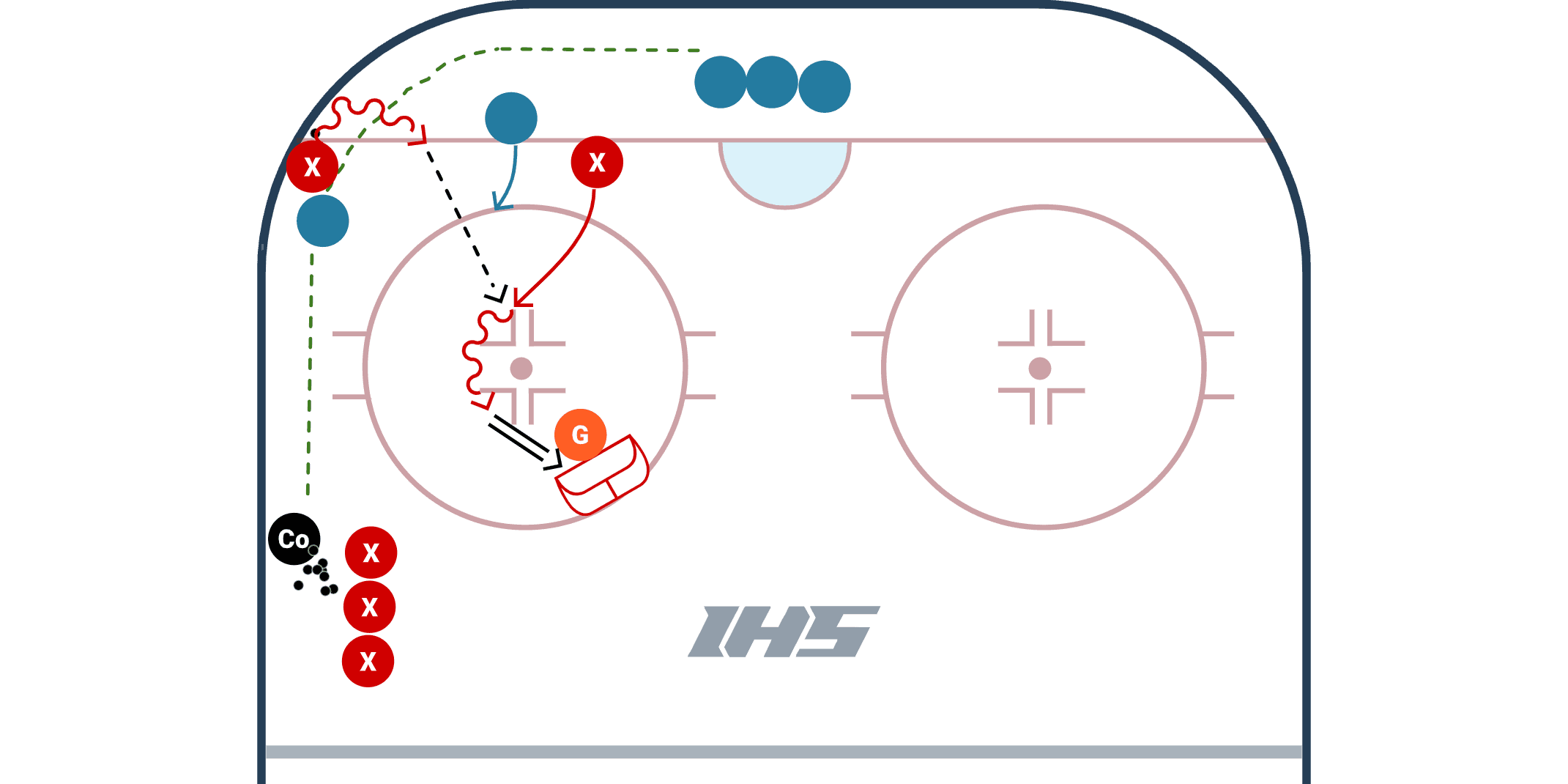
Objective To develop players' ability to make skilled plays in tight, confrontational areas near the boards. This small game focuses on puck protection, wall play, scanning, and quick decision-making under physical pressure. Execution - The coach throws a puck into the corner to start the game. - Players race for first touch, with the winning team starting on offense in a 2-on-2 battle. - Offensive players work to protect the puck using body positioning and puck protection techniques and then make a play off the wall. - Each new possession starts with a tag-up: - The team that gains possession must move the puck back behind the tag-up line and restart play from the wall. - Players focus on making quick, skilled plays off the wall, such as: - Scanning and shoulder-checking for teammates. - Making passes under pressure. - Using give-and-go plays to create offensive opportunities. - If a puck is shot wide or goes out of play, the coach immediately throws a new puck into the corner to continue the drill. - Each shift lasts approximately 30 seconds, with players experiencing 6–7 wall battles per shift.
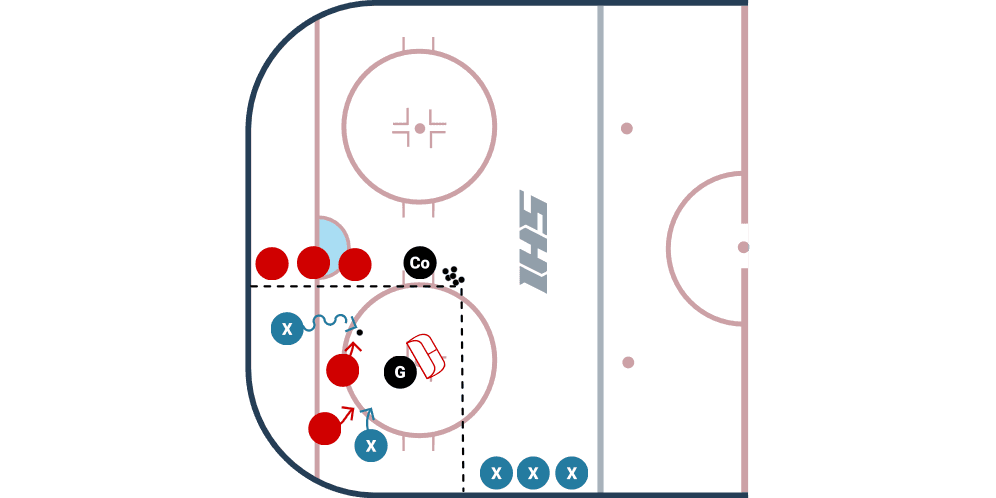
The 2 vs. 2 Corner Battle Tag up is a competitive game that requires to players protect the puck and utilize their teammates in a small area. This game has one major item to remember, during a change of possession, the team that got the puck must tag up at the goal line before they can try to score. Below we will discuss the setup, coaching points & variations. Variations - This setup can be 1 v 1 or 2 v 2. View a 1 on 1 example. - Can move the net in other areas to give the players more or less space.
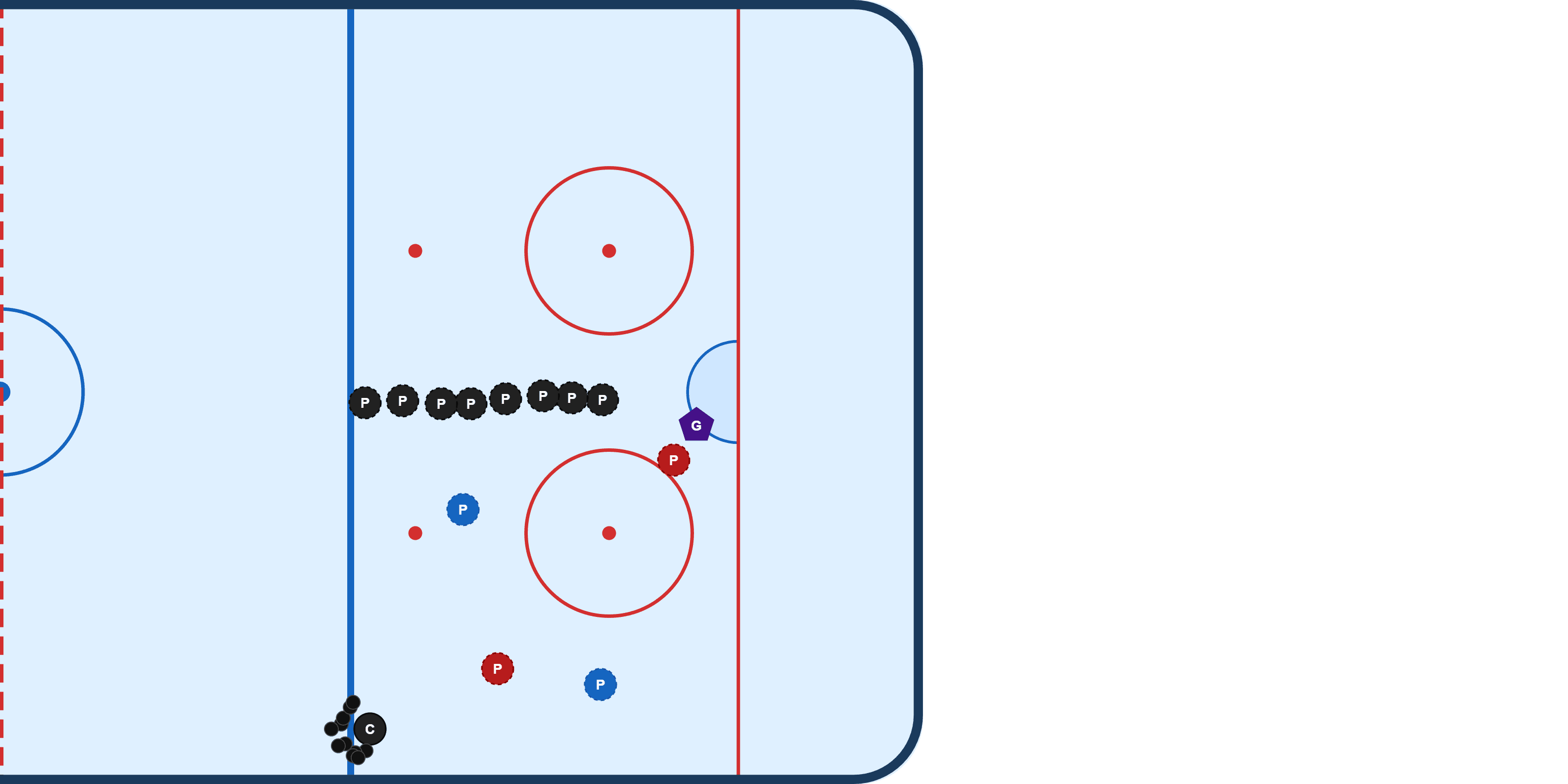
3v3 - Next 4 from the hash mark are up Change possession with a pass to the coach Utilize the whole zone You can skate through the "fence," but they can hit you and steal the puck Fence - if Coaches determine the hit to be illegal or a penalty, you will skate in the neutral zone Goals: Heads-up hockey Communication Attacking the net
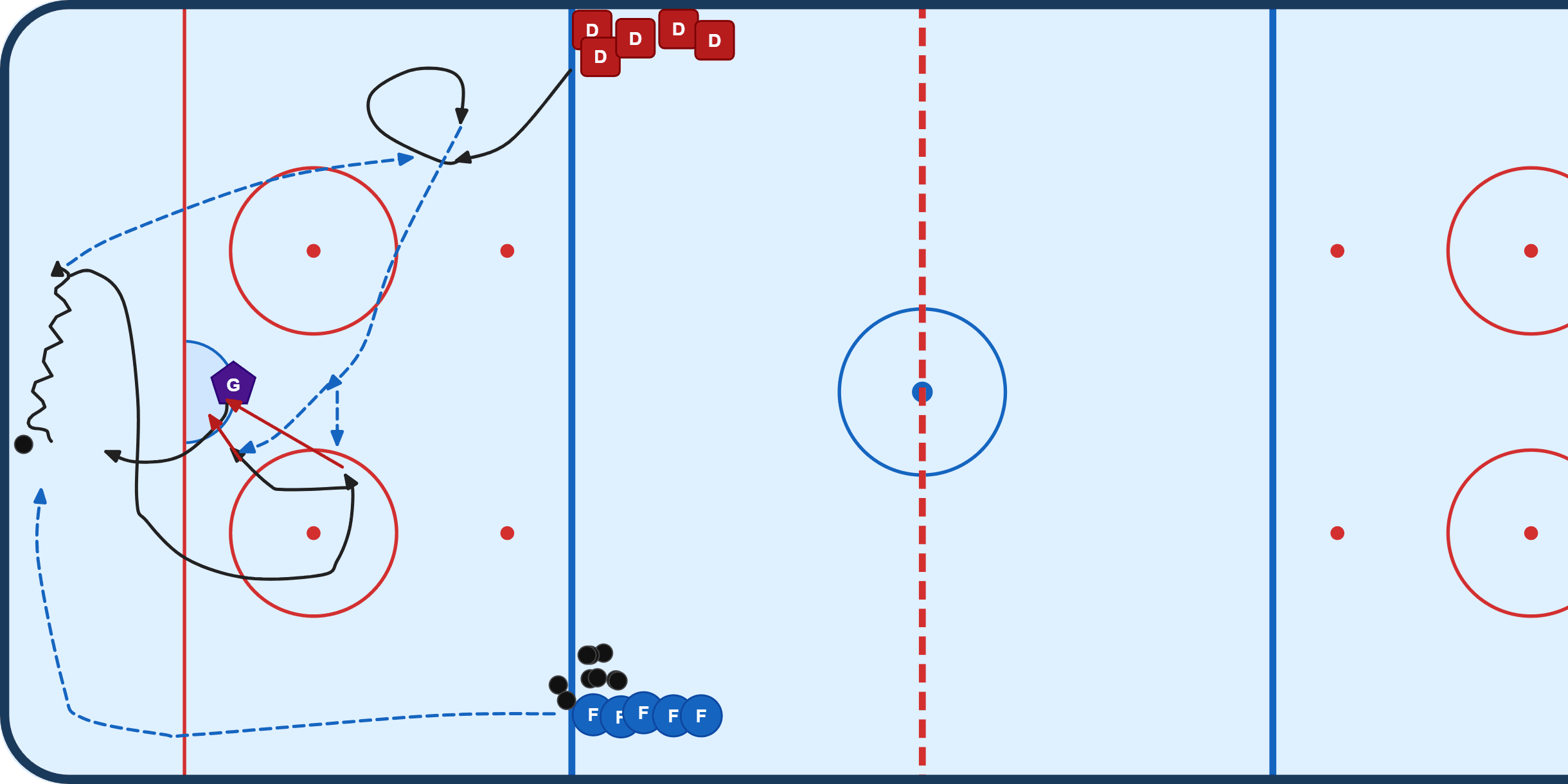
Forwards rim the puck around, and the goalie comes out to stop the puck. A forward skates and picks up the puck and passes the puck to the defensemen. Defensemen catch the pass, do an escape move into a pass to the forwards. Once the pass is completed, the forwards stop. Loop back to where they came from and look for a 1 timer or backdoor pass. Both Forwards and Defensemen can switch First video link is the defense escape move to backhand and forehand Second video link is the proper 1 timer form
Log In Get Full Access Toggle navigation - Hockey Drills - Practices - Coach Education - Skill Development - Coaching Clips - Systems - Draw Drills - Off-Ice - Blog - Goalies - Courses - Players & Parents Search
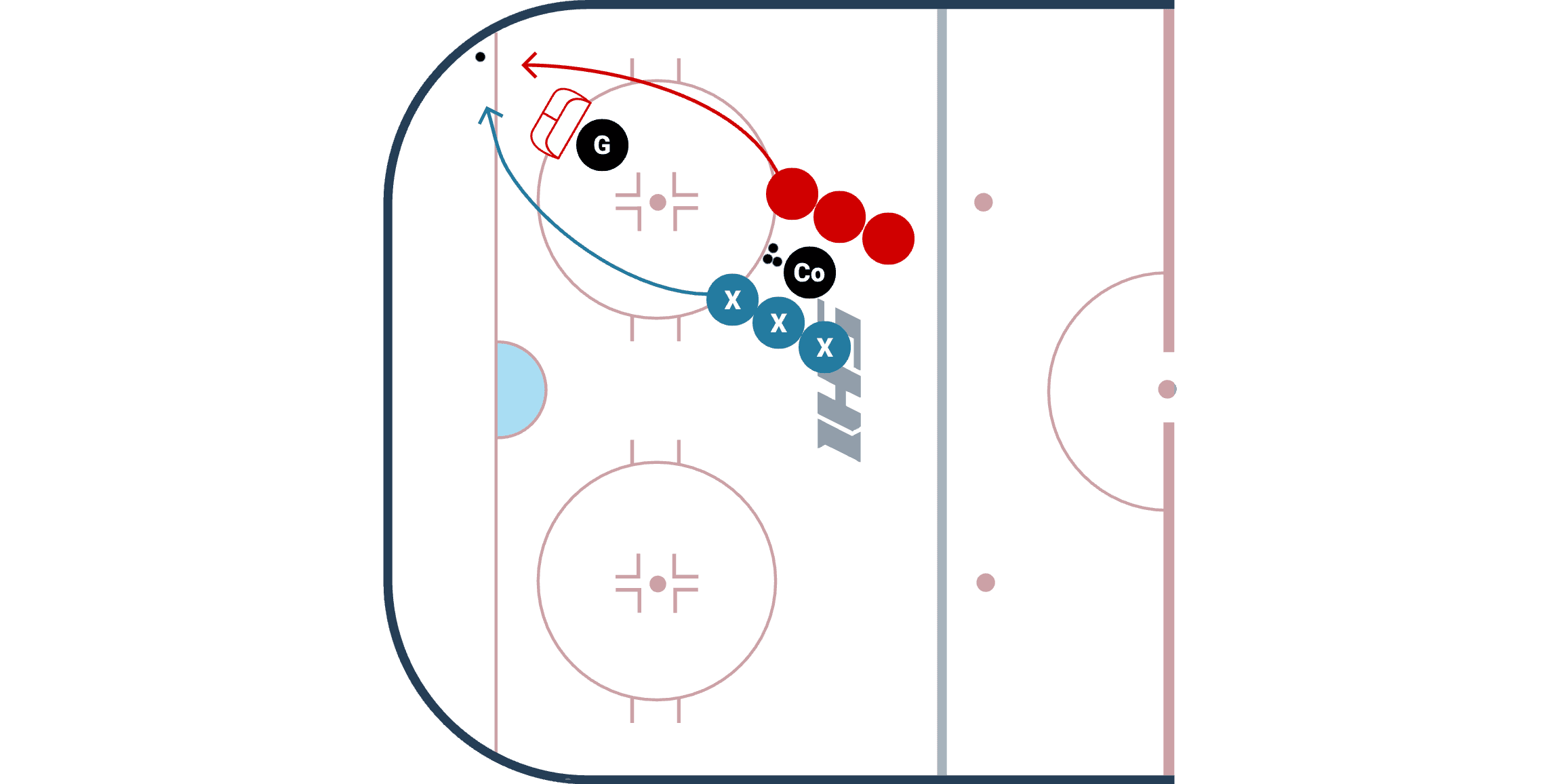
The SD Thomas 1 v 1 is a competitive battle game where two players play 1 against 1 in the corner of the ice. Whoever has the puck can score. Variations - Can play 1v1 or 2v2 or 3v3 - Can allow anyone with the puck to try to score, or you can create some sort of transition element that the defender has to do after they strip the puck to allow them to go on offense, one example would be to require the defense to pass the puck to the next player in line (who then passes the puck back quickly) to allow the defender to transition to offense.