
Global tactics library
Powerplay In-Zone
6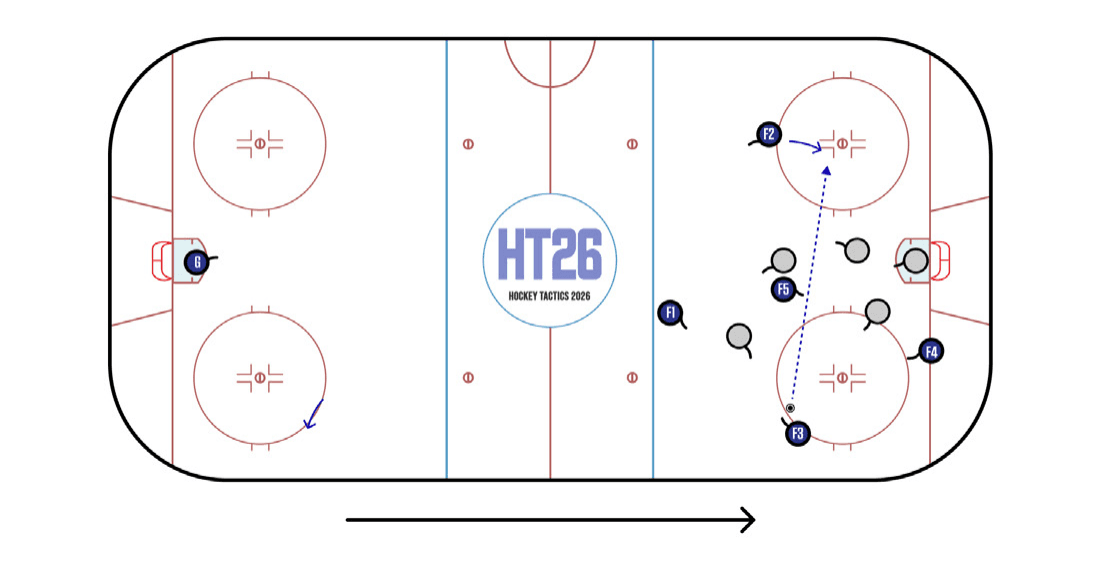
The 1-3-1 is the geometrically ideal powerplay setup. Player roles resemble those in a basketball half-court offense. The Point Guard (1), typically a defenseman, is a high playmaker and is relied upon as the last player back in case of turnover. The Weak-Side Flanker (2) stalks the area near the weak-side dot, looking to score off a cross-seam pass. The Strong-Side Flanker (3) is the unit’s primary playmaker. By virtue of their strategic positioning near the half-wall, they can create a scoring chance with an accurate pass to any teammate. The Net Player (4) stands in front of the opposing goalie when the puck is at the point, then relocates to the strong-side goal line as an additional passing option when the puck is passed to the flank. The Bumper (5) is the hub of the unit. The role calls for versatility, as this player must be adept at shooting off the catch, making passes in small areas and retrieving loose pucks below the goal line.
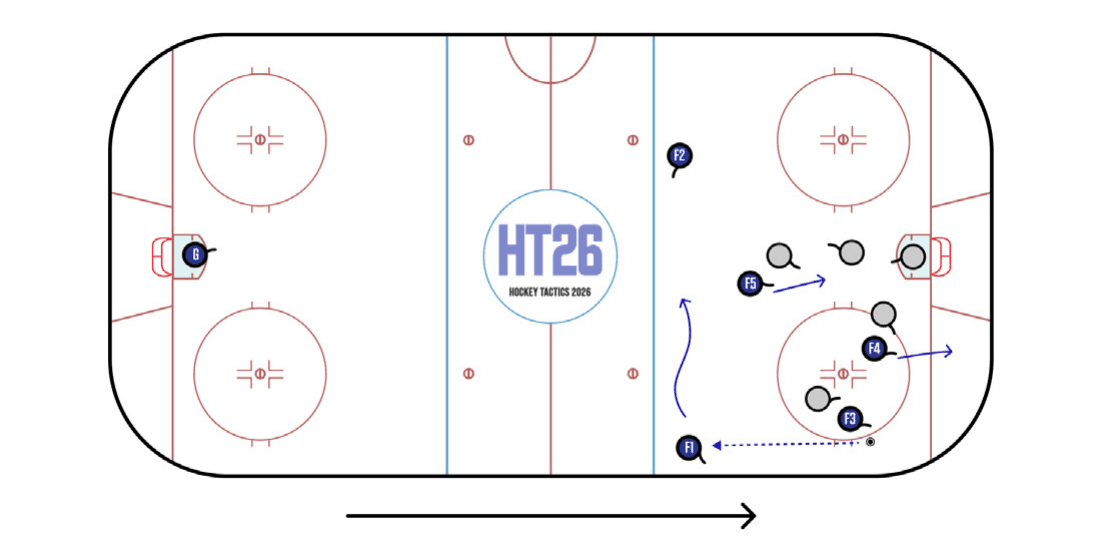
After a successful zone entry, #4 and #5 finish their routes toward the net to push PKers back. #1 moves to the strong-side wall so that #3 can make a blind back pass under pressure. #2 stops just inside the blue line as a D-to-D option, or to defend a turnover. Once in full control, #1 walks the blue line and the other skaters move into their assigned spots.
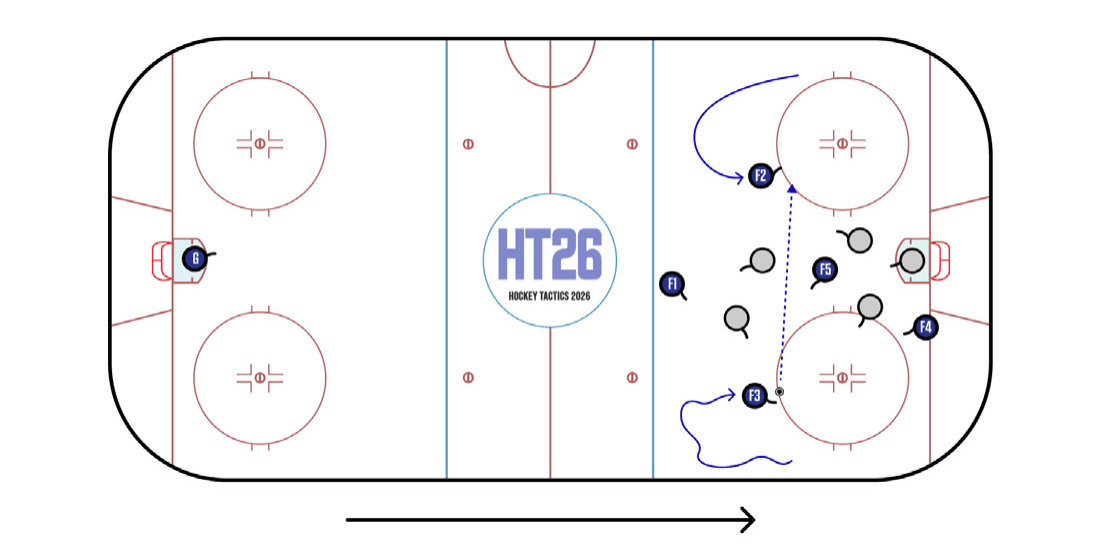
A popular variation of the 1-3-1 has both flank players on their strong sides (lefties on the left and vice versa). This setup allows the passer (3) to better protect the puck from penalty killers on their way toward the net, while providing the receiver (2) with an opportunity to either shoot or pass after the catch.
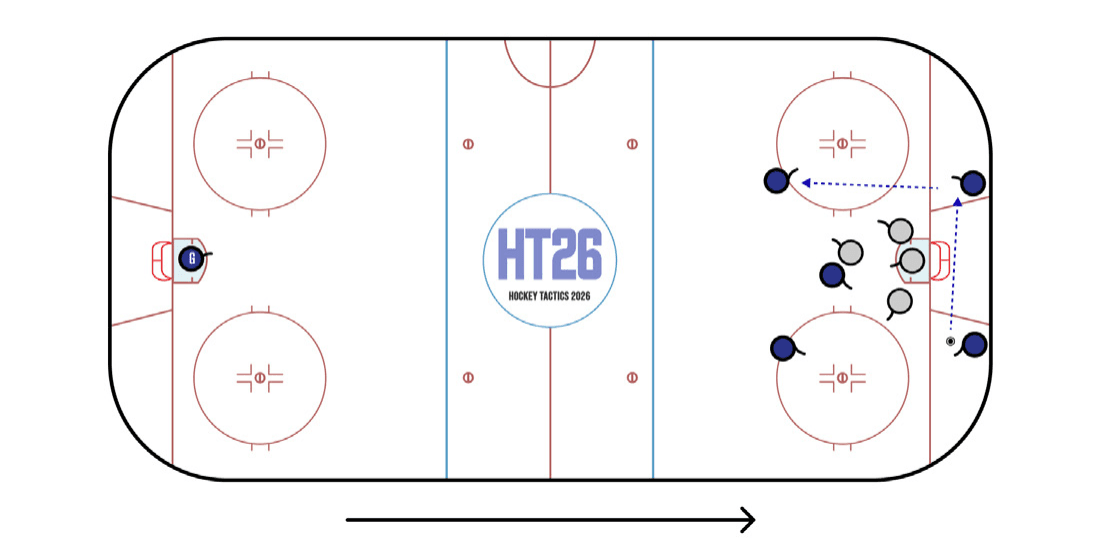
The 2-1-2 is more often seen at 5v3 than at 5v4. The bumper occupies the PKers’ attention while the low players set up an over-and-up sequence for the shooter in the high slot. This play is effective on a two-man advantage, as the point players can aggressively shorten the zone without the fear that a blocked shot will lead to a rush against.
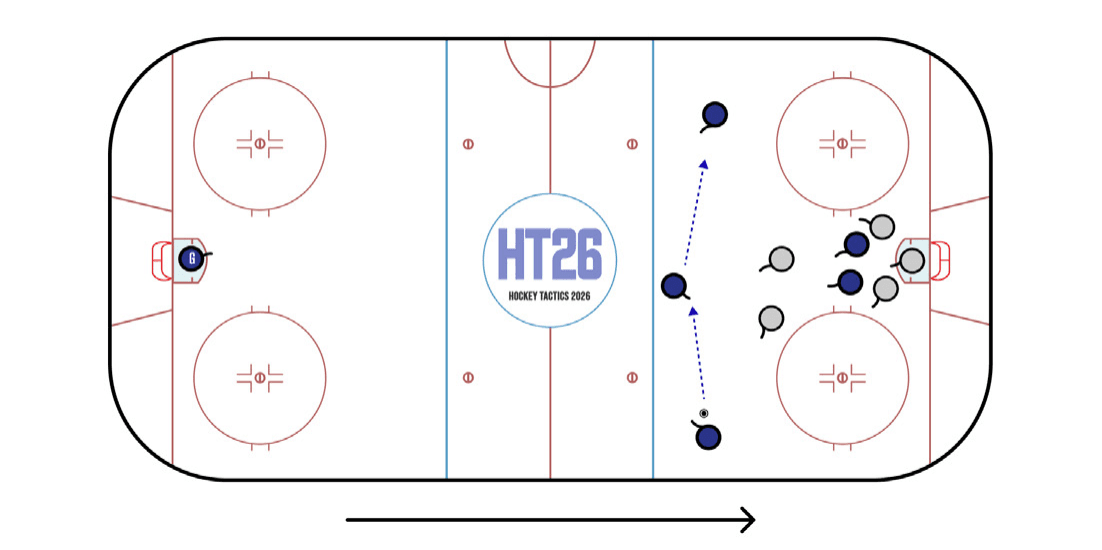
Two low players create tips, screens and rebounds. Three high players are responsible for setting up and getting the puck through to the net. This setup is more defensively sound than the 1-3-1 and can be effective against passive PKs that over-collapse to the slot.
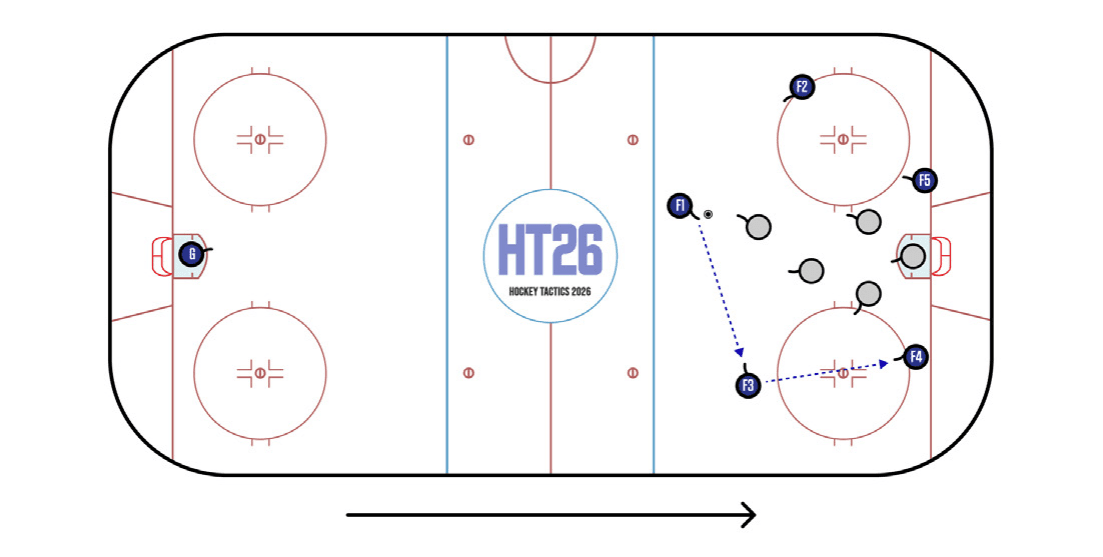
The main advantage of the 3-2, when compared to the 1-3-1, is the availability of a back-door option. Instead of standing in the slot, Player 5 moves outside the PK structure and stands near the far post. A quick down-and-over passing sequence creates a tap-in opportunity.