
Global tactics library
Low Defensive Zone Coverage
4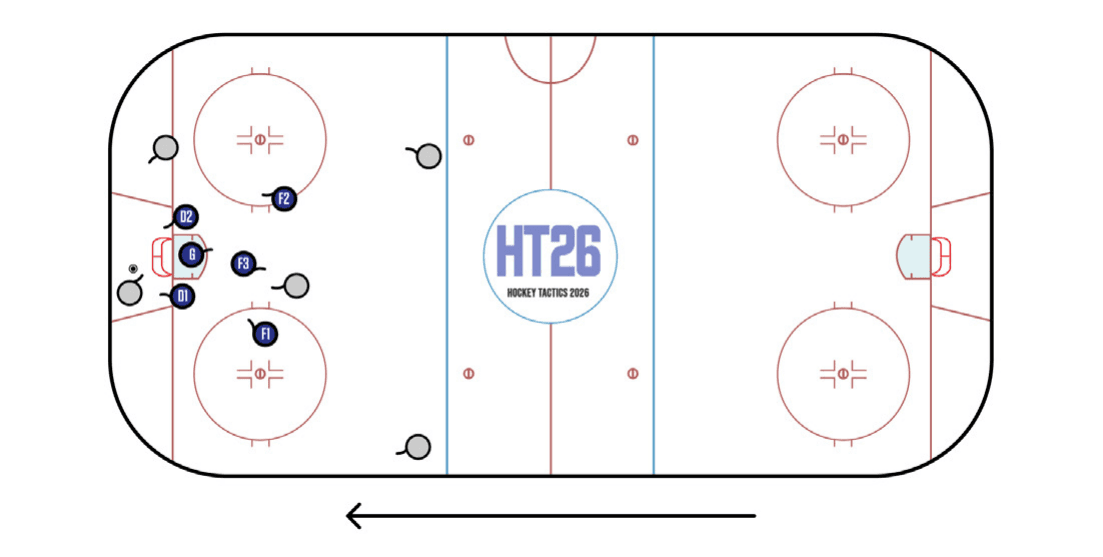
All five defenders collapse to the slot against behind the net plays. If only one defenseman chases underneath the goal line, a skilled puck carrier can fake one way, cut back the other and walk out front for a wraparound opportunity. If both Ds chase behind, the obvious play is a rim release toward either point. If neither chase, an especially cheeky player can pick the puck up and try for a lacrosse (a.k.a. Michigan) goal.
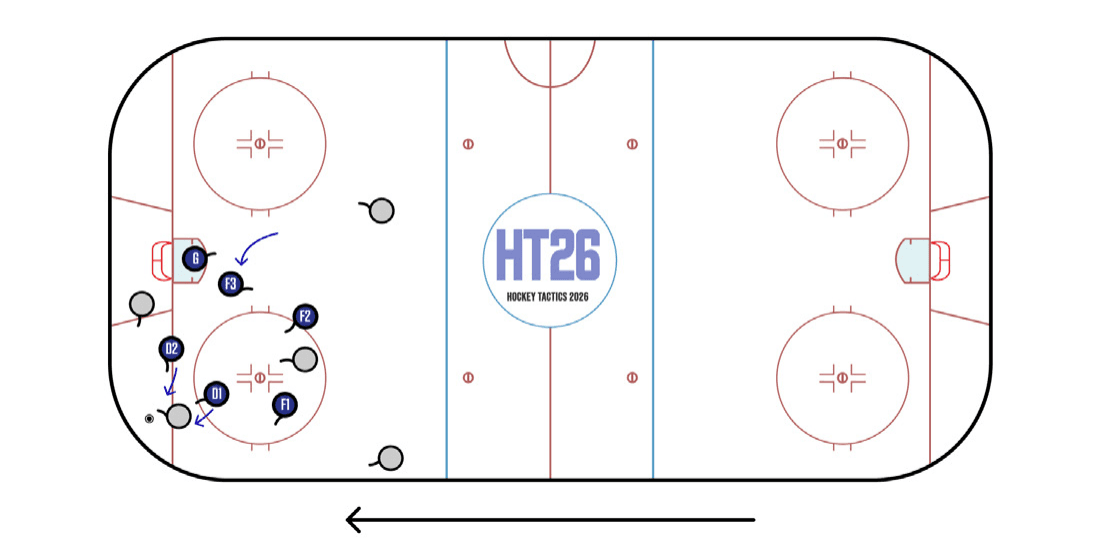
The Swarm is variation on the typical overload DZ coverage. D1 and D2, usually the first two players back in the zone, converge on the puck carrier. The front of the net is momentarily left open, until F3 arrives. In theory the Ds’ swarming action allows for a quicker defensive stop. The Swarm must be employed judiciously because 1) it can be defeated by a quick rim toward the strong-side point or the weak-side half wall and 2) defenders are overly compact and are therefore unable to break out effectively after winning the puck.
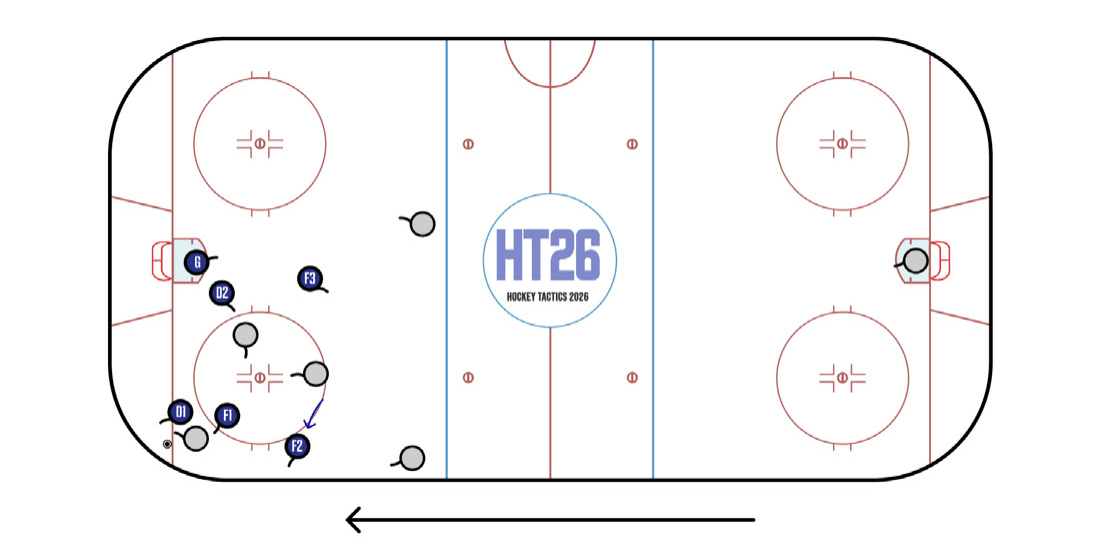
Five Tight creates a 5v3 overload in one corner. D1 and F1 work together to stop the opposing puck carrier and push him into the boards. F2 pre-emptively denies the simple low-to-high pass by cutting the top . F3 protects the slot. D2 protects the front of the net.
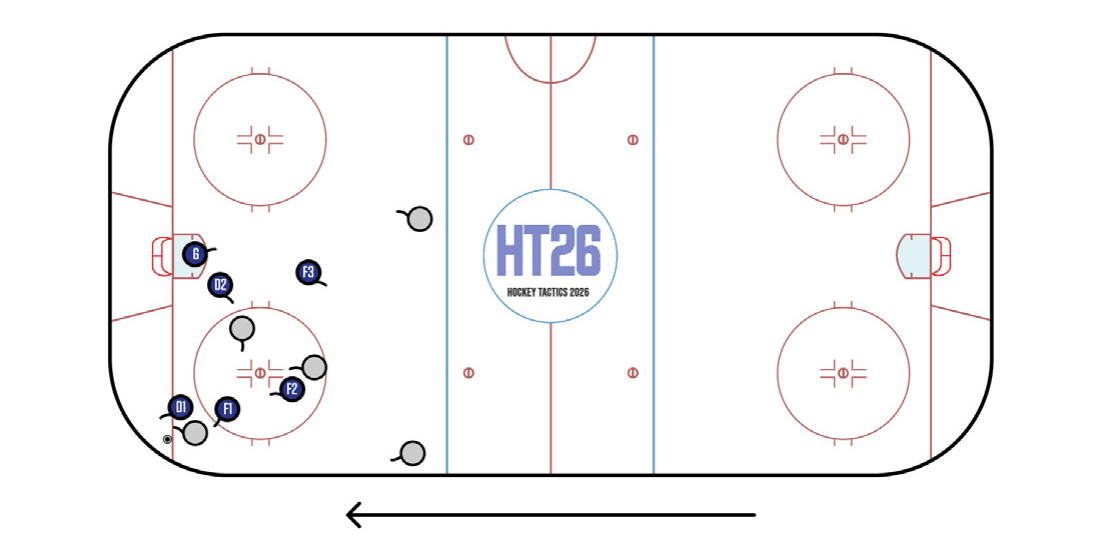
As an alternative to cutting the top, F2 can stay in the middle to mark the opposing high forward. The defensive team improves its slot coverage but relinquishes its ability to contest low-to-high play. This passive variant of the Five Tight can be effective for physical teams that look to counter-attack following slot turnovers and blocked point shots.