
Global tactics library
High Defensive Zone Coverage
4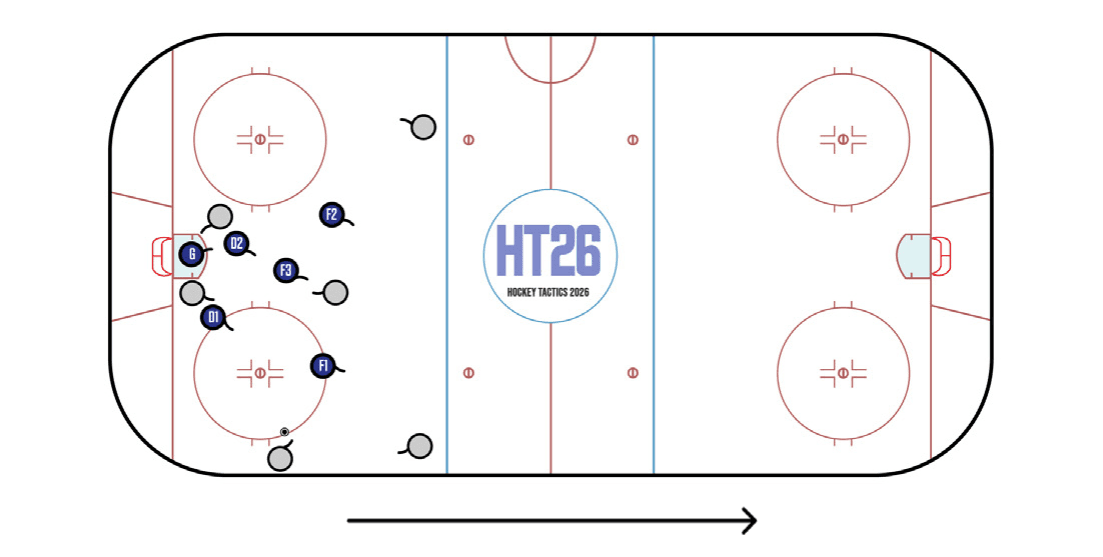
Short-handed situations (5v6, 4v5, etc.) call for zone defense. Instead of boxing out, Ds front the two opposing forwards near the net. This allows them to get in the way of point shots and help F3 protect the slot. In the example above, fronting turns a 5v6 into essentially a 5v4, which is great as long as the puck doesn’t get to the attackers at the top of the crease.
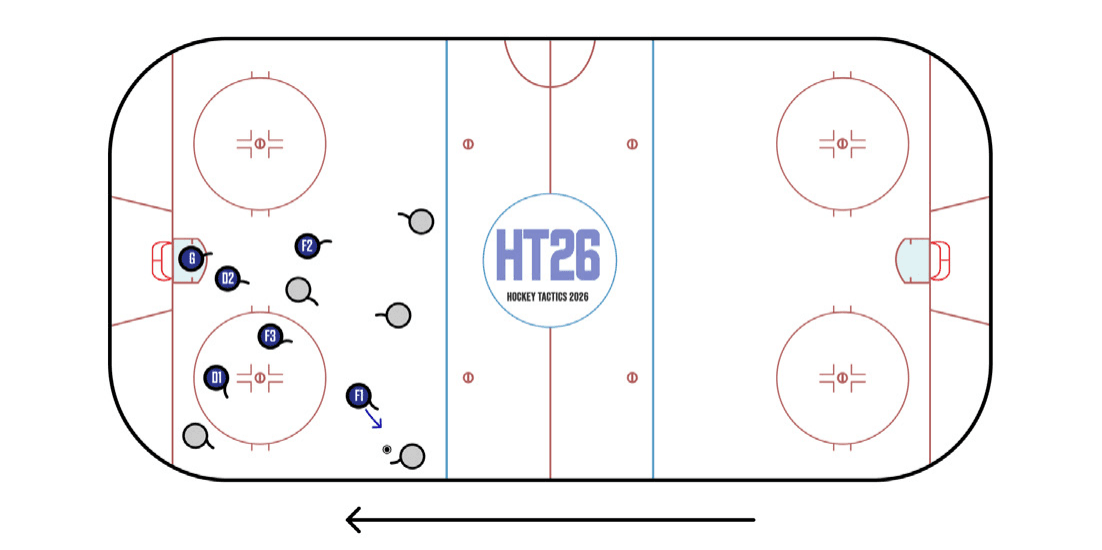
A zone defense denies shooting and passing lanes rather than individual players. As the puck is passed back to the point, F1 sprints toward the recipient while making sure he is in the shooting lane. F2 starts in the high slot but is ready to pressure a D-to-D pass. This stagger provides additional safety in the event that the puck carrier fakes out F1 and skates into the high slot.
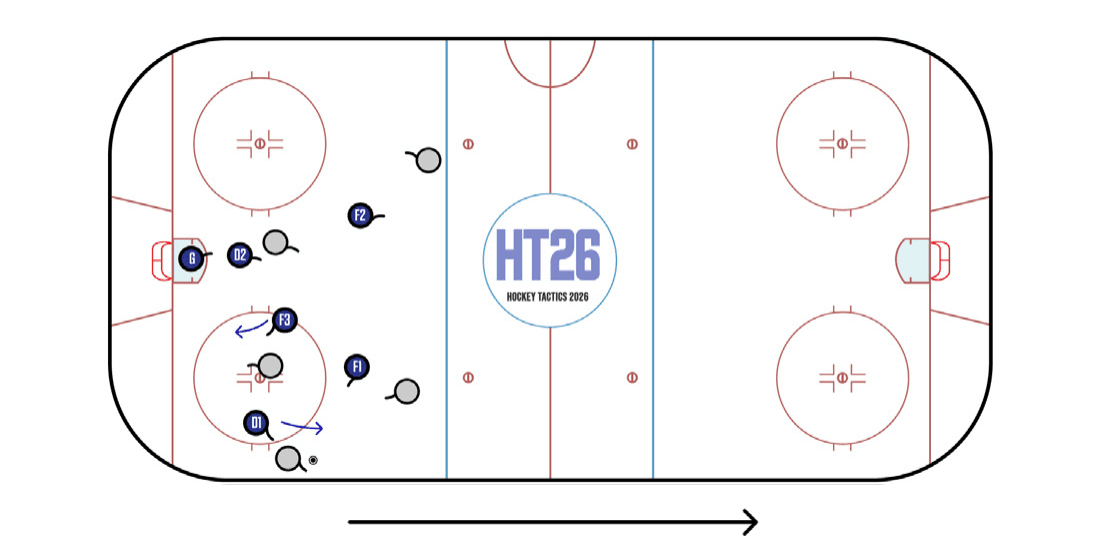
A popular compromise between zone and man coverage is the Hybrid. The defending team plays Five Tight down low, but quickly flex out into man-on-man coverage once the puck is passed to the blue line. On a low to high carry, D1 follows his man to prevent F1 from being out-numbered at the point. At the same time, F3 stays D side to prevent a 2v1 at the net.
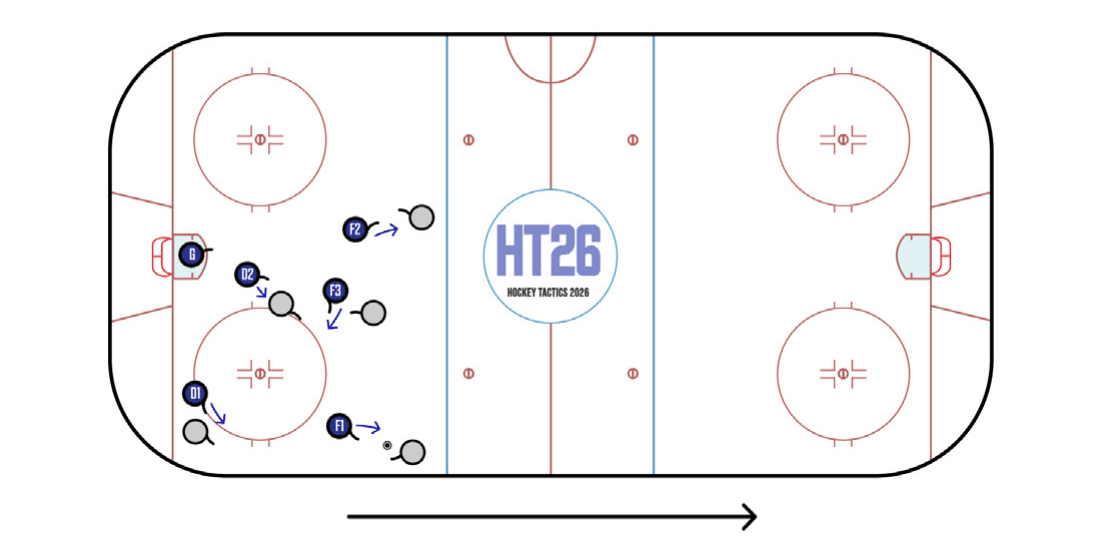
As the name indicates, man-on-man coverage focuses on individuals rather than lanes. All five defenders attach to their checks and do their best to stay D side (between the opponent and the net). A strict man-on-man DZC provides better high (from faceoff dots to the blue line) coverage at the expense of inferior low (dots to end boards) coverage. If the attacking team moves the puck toward the corner, it’ll be playing 3v3 down low rather than 3v5